Nomi
UPF Food Scanner
Know what’s really in your food
Get the free app

Chocolate Biscuits

Barcode 000000382472
Ultra-Processed Food (UPF)

Yes — Chocolate Biscuits is ultra-processed.

A sweet chocolate biscuit, best enjoyed occasionally rather than daily.

This is a chocolate biscuit product containing several industrially processed ingredients and additives that meet the UPF criteria. The contributing ingredients include soya lecithin, an emulsifier; invert sugar syrup, an industrially processed syrup; glucose syrup and dried glucose syrup, refined isolated sugars; and diphosphates, a processed raising agent. These ingredients make the product ultra-processed under the specified NOVA guidance. Other ingredients, such as sugar, milk, butter, cocoa, wheat flour, eggs, citric acid, sodium bicarbonate, and carbonates, do not independently determine the UPF classification.

Ingredients

7 ultra-processed markers
  • UPF
    milk chocolate (42%)
    A chocolate confection made from cocoa solids, sugar, milk solids, and fats; the (42%) refers to cocoa content. Generally a processed sweetened product used as a confection or baking ingredient.
  • OK
    sugar
    Granulated sugar derived from sugarcane or sugar beets; a basic, single-ingredient sweetener.
  • OK
    cocoa butter
    A fat extracted from cocoa beans, used in chocolate, cosmetics, and baking as a fat component.
  • OK
    cocoa mass
    Ground or melted cocoa beans; pure cocoa solids used for chocolate making.
  • UPF
    skimmed cow's milk powder
    Dried, skimmed milk solids produced by removing most of the fat from cow's milk, used as a dairy ingredient or additive.
  • OK
    cow's milk
    Liquid dairy milk from cows, a basic food used as a beverage or ingredient in many dishes.
  • OK
    fat-reduced cocoa powder
    Cocoa powder from which most of the fat (cocoa butter) has been removed; used to add cocoa flavor with lower fat content.
  • UPF
    soy lecithin
    A natural emulsifier derived from soybeans used to improve texture and mix fats with water.
  • OK
    wheat flour
    Finely ground cereal flour from wheat; a fundamental baking ingredient.
  • OK
    calcium carbonate
    A basic inorganic calcium salt used as a nutrition supplement and anticaking agent in foods.
  • OK
    citric acid
    A weak organic acid found in citrus fruits, commonly used as an acidulant and preservative in foods and beverages.
  • UPF
    invert sugar syrup
    A refined sugar syrup produced by hydrolyzing sucrose into glucose and fructose; a processed sweetener often used in foods.
  • OK
    butter
    Dairy fat made by churning cream, common in cooking and baking.
  • OK
    pasteurised egg
    A basic animal-derived food ingredient from eggs. Used as a protein source in dishes.
  • OK
    syrup
    A sweet, viscous liquid produced from sugar or starch that is used as a sweetener or flavoring in foods.
  • OK
    fat-reduced dark chocolate
    A dark chocolate with reduced fat content, typically made by replacing part of the cocoa butter with other fats or ingredients.
  • OK
    milk
    A dairy liquid produced by cows; a basic, widely used food ingredient.
  • OK
    cocoa powder
    Powdered product derived from roasted cocoa beans, typically unsweetened and used for flavoring and color in baking and desserts.
  • OK
    dark chocolate
    A chocolate variety with a high percentage of cocoa solids and little to no milk solids, often used for snacking or baking.
  • UPF
    glucose syrup
    A processed syrup made from starch (usually corn) consisting mainly of glucose; commonly used as a sweetener and thickener.
  • UPF
    dried glucose syrup
    Concentrated, dried form of glucose syrup, a refined sweetener derived from carbohydrates.
  • OK
    glucose
    Glucose (dextrose) is a simple monosaccharide sugar commonly used as a sweetener in foods; it can also act as a humectant or texturizer in certain formulations.
  • OK
    butter
    A dairy product made by churning cream; a basic fat used in cooking and baking.
  • OK
    sodium bicarbonate
    Baking soda; a basic leavening agent used in baking and cooking.
  • UPF
    diphosphates
    A class of phosphate salts used as food additives (e.g., leavening agents, sequestrants, or stabilizers) in processed foods.
  • OK
    sodium carbonate
    Inorganic salt used as a leavening agent or acidity regulator; a basic culinary ingredient.
  • OK
    citric acid
    A naturally occurring weak organic acid used as an acidity regulator and preservative in foods and beverages.

Common questions about Chocolate Biscuits

Is Chocolate Biscuits ultra-processed?

Yes — Chocolate Biscuits is ultra-processed, so it counts as a UPF (ultra-processed food). This is a chocolate biscuit product containing several industrially processed ingredients and additives that meet the UPF criteria. The contributing ingredients include soya lecithin, an emulsifier; invert sugar syrup, an industrially processed syrup; glucose syrup and dried glucose syrup, refined isolated sugars; and diphosphates, a processed raising agent. These ingredients make the product ultra-processed under the specified NOVA guidance. Other ingredients, such as sugar, milk, butter, cocoa, wheat flour, eggs, citric acid, sodium bicarbonate, and carbonates, do not independently determine the UPF classification.

Which ingredients in Chocolate Biscuits are ultra-processed?

Nomi flags 7 ingredients in Chocolate Biscuits as ultra-processed markers: milk chocolate (42%), skimmed cow's milk powder, soy lecithin, invert sugar syrup, glucose syrup, dried glucose syrup, diphosphates. See the full ingredient breakdown above for what each one is.

What does "ultra-processed" (UPF) mean?

Ultra-processed foods (UPFs) are industrial formulations made with ingredients and additives you wouldn't find in a home kitchen — such as emulsifiers, artificial flavourings, colourings and modified starches. The classification is based on the NOVA system used by researchers and dietitians worldwide.

How can I check whether other foods are ultra-processed?

Scan any barcode — or photograph the ingredients label — with the free Nomi app for iOS and Android. You'll get an instant ultra-processed verdict with every ingredient explained in plain English.

BBC As seen on The One Show

Scan it yourself,
right in the aisle

This page was shared from Nomi, the free app that tells you instantly whether any food is ultra-processed.

  • Scan any barcode — or photograph the ingredients label
  • Every ingredient explained in plain English
  • Daily check-ins show how food affects how you feel
  • Save favourites and build a healthier shopping list

Free download · No subscription needed to start scanning

Nomi monthly wellbeing report
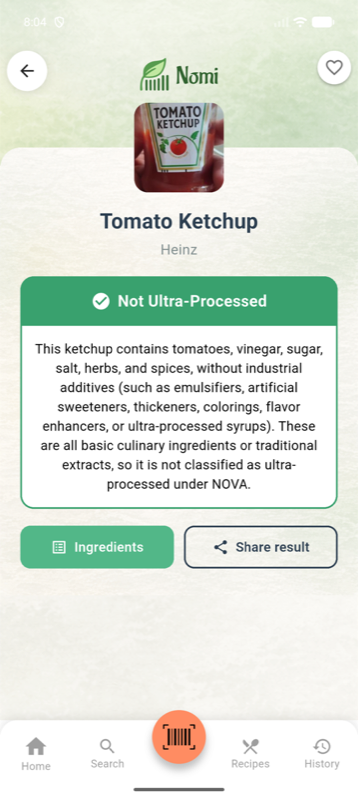
Nomi scan result screen

Product information comes from public databases and Nomi's own analysis, and may contain errors. Always check the packaging. Ultra-processed classification is based on the NOVA food processing system.

Nomi — UPF Scanner Free on iOS & Android
Get the app