Nomi
UPF Food Scanner
Know what’s really in your food
Get the free app
Bang bang noodle salad by Marks & Spencer
Marks & Spencer

Bang bang noodle salad

Barcode 29157327
Scanned  16  times by Nomi users
Ultra-Processed Food (UPF)

Yes — Bang bang noodle salad is ultra-processed.

Not a great choice for everyday.

This product is ultra-processed because it contains palm oil, which is a highly processed and refined oil. The dressing also contains a stabilizer, an industrial additive used to modify texture and maintain consistency. These ingredients contribute to its ultra-processed classification, while the vegetables, rice noodles, herbs, spices, and basic sunflower/rapeseed oils are not the main concern.

Ingredients

1 ultra-processed marker
  • OK
    cooked rice noodles (23%) (water, rice flour)
  • OK
    peanut
    A legume used as a snack or ingredient; common allergen.
  • OK
    coconut and chilli dressing (16%)
  • OK
    cabbage (10%)
  • OK
    edamame soybeans (8%)
  • OK
    butternut squash (8%)
  • OK
    sugar snap peas (7%)
  • OK
    courgette
    British term for zucchini, a summer squash eaten raw or cooked.
  • OK
    peppers
    A general term for various edible peppers, often bell peppers or chili peppers, used fresh or cooked.
  • OK
    spring onions
    Fresh green onions grown in soil; mild onion flavor used as a vegetable or garnish.
  • OK
    peanuts
    A legume commonly eaten roasted or ground into peanut butter; a common basic ingredient in foods.
  • OK
    coriander (cilantro seeds)
    Dried seeds of the coriander plant (Coriandrum sativum). Warm, citrusy flavor used ground or as whole seeds in spice blends and curries.
  • OK
    vegetable oil (sunflower/rapeseed)
    A neutral-tasting cooking oil extracted from sunflower and/or rapeseed; used for frying and sautéing.
  • OK
    lime juice
    Juice extracted from limes; a basic culinary ingredient used for acidity and flavor.
  • OK
    ginger purée
    A smooth paste made from ginger, used to impart ginger flavor in sauces and dishes.
  • OK
    sugar
    Granulated sugar derived from sugarcane or sugar beets; a basic, single-ingredient sweetener.
  • OK
    coconut cream (coconut extract, water)
  • OK
    salt
    Common mineral compound (sodium chloride) used as a seasoning and preservative across cuisines.
  • OK
    lemongrass
    A tall, aromatic grass with citrusy notes used fresh or dried in soups, curries, and teas.
  • OK
    lime leaves
    Fragant leaves from the lime tree, used to impart citrus aroma in cooking and in various cuisines.
  • OK
    roasted garlic purée
    Smooth purée made from garlic that has been roasted; used to impart mellow garlic flavor in sauces, dressings, and dishes.
  • OK
    turmeric
    A bright orange-yellow root commonly used as a spice and for its active compound curcumin, with warm, earthy, slightly peppery flavor.
  • OK
    cornflour
    Ground corn starch used as a thickening agent in cooking and baking.
  • OK
    black sesame seeds
  • OK
    potato starch
    A basic, finely ground starch derived from potatoes; used as a thickener and binder in foods.
  • OK
    paprika flakes
  • OK
    ground cayenne pepper. peanut
  • OK
    coconut and chilli dressing contains water
  • OK
    garlic purée
    Pureed garlic, often used as a flavoring base.
  • OK
    red chili purée
    A smooth paste made from red chili peppers, used to add heat and color in dishes. Typically a simple, single-ingredient puree.
  • OK
    soybeans
    Dried seeds of the soybean, used to make soy products like tofu, soy milk, and soy sauce.
  • OK
    wheat
    The seed of the wheat plant, a staple cereal grain rich in gluten.
  • OK
    stabiliser
  • OK
    pectin
    A natural polysaccharide derived from plant cell walls, used as a gelling and thickening agent in jams, jellies, and desserts.
  • UPF
    palm oil
    A widely used edible oil pressed from the fruit of oil palms; a basic culinary oil but highly processed in many commercial products.
  • OK
    peanut oil
  • OK
    rapeseed oil
    A basic culinary oil pressed from rapeseeds (Brassica napus). Used for frying, baking, and dressings. Neutral flavor.

Common questions about Bang bang noodle salad

Is Bang bang noodle salad ultra-processed?

Yes — Bang bang noodle salad by Marks & Spencer is ultra-processed, so it counts as a UPF (ultra-processed food). This product is ultra-processed because it contains palm oil, which is a highly processed and refined oil. The dressing also contains a stabilizer, an industrial additive used to modify texture and maintain consistency. These ingredients contribute to its ultra-processed classification, while the vegetables, rice noodles, herbs, spices, and basic sunflower/rapeseed oils are not the main concern.

Which ingredients in Bang bang noodle salad are ultra-processed?

Nomi flags one ingredient in Bang bang noodle salad as an ultra-processed marker: palm oil. See the full ingredient breakdown above for what each one is.

What does "ultra-processed" (UPF) mean?

Ultra-processed foods (UPFs) are industrial formulations made with ingredients and additives you wouldn't find in a home kitchen — such as emulsifiers, artificial flavourings, colourings and modified starches. The classification is based on the NOVA system used by researchers and dietitians worldwide.

How can I check whether other foods are ultra-processed?

Scan any barcode — or photograph the ingredients label — with the free Nomi app for iOS and Android. You'll get an instant ultra-processed verdict with every ingredient explained in plain English.

BBC As seen on The One Show

Scan it yourself,
right in the aisle

This page was shared from Nomi, the free app that tells you instantly whether any food is ultra-processed.

  • Scan any barcode — or photograph the ingredients label
  • Every ingredient explained in plain English
  • Daily check-ins show how food affects how you feel
  • Save favourites and build a healthier shopping list

Free download · No subscription needed to start scanning
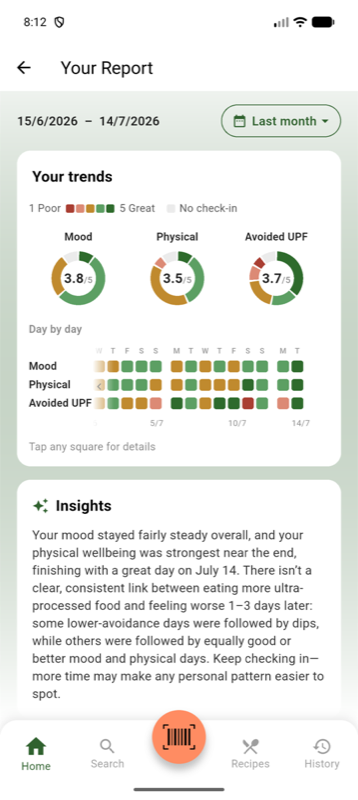
Nomi monthly wellbeing report
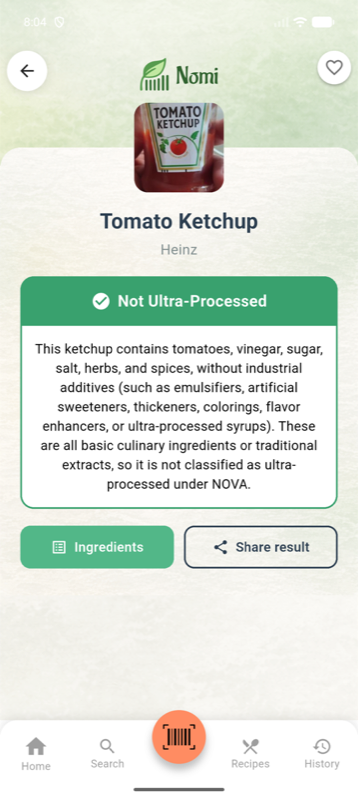
Nomi scan result screen

Product information comes from public databases and Nomi's own analysis, and may contain errors. Always check the packaging. Ultra-processed classification is based on the NOVA food processing system.

Nomi — UPF Scanner Free on iOS & Android
Get the app