Nomi
UPF Food Scanner
Know what’s really in your food
Get the free app
Tesco

Eat your greens feta salad

Barcode 5059697257186
Not Ultra-Processed

No — Eat your greens feta salad is not ultra-processed.

The ingredient list consists of minimally processed culinary ingredients (grains, vegetables, herbs, cheeses, vinegars, basic oils, seeds, and standard acids/antioxidants like citric acid and ascorbic acid). There are no industrial sweeteners, emulsifiers, stabilizers, flavor enhancers, or industrial sugar syrups present. Therefore, according to the described NOVA criteria, it is not classified as ultra-processed.

Ingredients

No ultra-processed markers
  • OK
    cooked giant couscous [giant couscous (wheat)
  • OK
    water
    Essential base ingredient for countless foods and beverages; serves as solvent and texture modifier.
  • OK
    rapeseed oil]
  • OK
    wild garlic pesto dressing (12%) [water
  • OK
    rapeseed oil
    A basic culinary oil pressed from rapeseeds (Brassica napus). Used for frying, baking, and dressings. Neutral flavor.
  • OK
    wild garlic
  • OK
    basil
    A leafy herb used fresh or dried to flavor dishes; not typically processed as a food ingredient beyond drying or freshness.
  • OK
    medium fat hard cheese (milk)
    A hard cheese made from cow's milk with moderate fat content, often aged and used in cooking or as a table cheese.
  • OK
    spirit vinegar
    A clear, distilled vinegar typically made from fermented alcohol (ethanol) and used for pickling, flavoring, and preservation.
  • OK
    lemon juice
    The clear, acidic juice extracted from lemons, used for brightness and acidity in foods and drinks.
  • OK
    extra virgin olive oil
    A high-quality, cold-pressed olive oil pressed from olives, used as a cooking oil and dressing; basic culinary ingredient.
  • OK
    garlic purée
    Pureed garlic, often used as a flavoring base.
  • OK
    sunflower oil
    A neutral-tasting culinary oil pressed from sunflower seeds, rich in unsaturated fats and commonly used for frying and dressings.
  • OK
    salt
    Common mineral compound (sodium chloride) used as a seasoning and preservative across cuisines.
  • OK
    cornflour
    Ground corn starch used as a thickening agent in cooking and baking.
  • OK
    potato starch
    A basic, finely ground starch derived from potatoes; used as a thickener and binder in foods.
  • OK
    black pepper
    A common spice made from dried peppercorns of the Piper nigrum plant, used to add pungent heat and aroma to dishes.
  • OK
    antioxidant (ascorbic acid)]
  • OK
    cooked couscous [water
  • OK
    durum wheat semolina]
  • OK
    peas
    Small, round, green legumes typically used as a vegetable.
  • OK
    cucumber
    A fresh, crunchy green vegetable commonly eaten raw in salads and as a snack.
  • OK
    cooked red quinoa [water
  • OK
    red quinoa]
  • OK
    feta cheese (milk) (6%)
  • OK
    apple
    A round, sweet to tart fruit with a crisp flesh and edible skin, commonly eaten fresh or used in baking and cooking.
  • OK
    spinach
    Leafy green vegetable commonly used as a fresh or cooked ingredient.
  • OK
    apollo lettuce
  • OK
    cabbage
    A fresh cruciferous vegetable, typically used raw in salads or cooked as a side dish; nutrient-rich and minimally processed.
  • OK
    pumpkin seeds
    Edible seeds of pumpkins, rich in healthy fats, protein, and minerals; commonly used roasted or as a topping or ingredient in baking.
  • OK
    sunflower seeds
    Small, edible seeds with a mild nutty flavor, used in snacks, baking, and cooking.
  • OK
    cider vinegar
    Fermented apple cider turned into a sour, acidic liquid used for dressings and as a flavoring.
  • OK
    sugar
    Granulated sugar derived from sugarcane or sugar beets; a basic, single-ingredient sweetener.
  • OK
    lemon zest
    Fresh citrus peel grated or shredded to add aroma and brightness; contains essential oils and zest oils.
  • OK
    olive oil
    A basic culinary oil pressed from olives, used for cooking, dressing, and flavor.
  • OK
    mint
    A fresh herb with aromatic leaves used to flavor and garnish dishes, beverages, and desserts.
  • OK
    chili flakes
    Crushed dried chili peppers used to add heat and flavor to dishes; a common spice.
  • OK
    lemon juice concentrate
    Lemon juice that has been concentrated by removing water; used as a souring agent or flavoring in foods.
  • OK
    mustard flour
    Ground mustard seeds used as a spice or condiment; a basic, natural ingredient derived from mustard seeds.
  • OK
    parsley
    A fresh green herb used to flavor and garnish dishes; commonly added chopped leaves.
  • OK
    chives
    A fresh herb with a mild onion-like flavor, commonly used as a seasoning or garnish.
  • OK
    onion powder
    Dried and ground onion used as a seasoning to impart onion flavor.
  • OK
    wheat flour
    Finely ground cereal flour from wheat; a fundamental baking ingredient.
  • OK
    citric acid
    A natural organic acid used to balance acidity and preserve foods; a common food additive.
  • OK
    turmeric
    A spice derived from the root of Curcuma longa, used for color and flavor.
  • OK
    including cereals containing gluten
  • OK
    see ingredients in bold. suitable for vegetarians. storage keep refrigerated

Common questions about Eat your greens feta salad

Is Eat your greens feta salad ultra-processed?

No — Eat your greens feta salad by Tesco is not ultra-processed, so it is not a UPF (ultra-processed food). The ingredient list consists of minimally processed culinary ingredients (grains, vegetables, herbs, cheeses, vinegars, basic oils, seeds, and standard acids/antioxidants like citric acid and ascorbic acid). There are no industrial sweeteners, emulsifiers, stabilizers, flavor enhancers, or industrial sugar syrups present. Therefore, according to the described NOVA criteria, it is not classified as ultra-processed.

What does "ultra-processed" (UPF) mean?

Ultra-processed foods (UPFs) are industrial formulations made with ingredients and additives you wouldn't find in a home kitchen — such as emulsifiers, artificial flavourings, colourings and modified starches. The classification is based on the NOVA system used by researchers and dietitians worldwide.

How can I check whether other foods are ultra-processed?

Scan any barcode — or photograph the ingredients label — with the free Nomi app for iOS and Android. You'll get an instant ultra-processed verdict with every ingredient explained in plain English.

BBC As seen on The One Show

Scan it yourself,
right in the aisle

This page was shared from Nomi, the free app that tells you instantly whether any food is ultra-processed.

  • Scan any barcode — or photograph the ingredients label
  • Every ingredient explained in plain English
  • Daily check-ins show how food affects how you feel
  • Save favourites and build a healthier shopping list

Free download · No subscription needed to start scanning
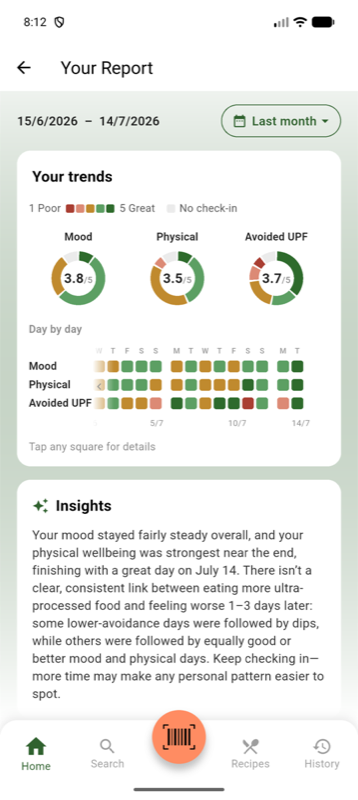
Nomi monthly wellbeing report
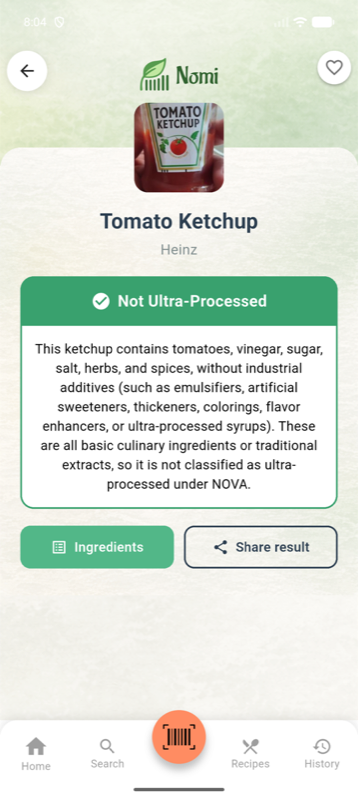
Nomi scan result screen

Product information comes from public databases and Nomi's own analysis, and may contain errors. Always check the packaging. Ultra-processed classification is based on the NOVA food processing system.

Nomi — UPF Scanner Free on iOS & Android
Get the app