Nomi
UPF Food Scanner
Know what’s really in your food
Get the free app
Chocolate by Huel
Huel

Chocolate

Barcode 5060495113291
Scanned  130  times by Nomi users
Ultra-Processed Food (UPF)

Yes — Chocolate is ultra-processed.

The product is classified as ultra-processed because it contains several industrial additives and formulations, including: soluble vegetable fibre (chicory, corn), medium-chain triglyceride powder (from coconut), natural flavourings, emulsifier (sunflower lecithin), thickener (gellan gum), and the artificial sweetener sucralose. According to the NOVA criteria, the presence of these types of additives and engineered ingredients used for texture, flavour, and shelf-life moves the product into the ultra-processed category, even though it also contains some minimally processed ingredients like water, pea protein, oat flour, rapeseed oil, cocoa powder, and coconut sugar. The additives and engineered ingredients dominate the processing classification.

Ingredients

6 ultra-processed markers
  • OK
    water
    Essential base ingredient for countless foods and beverages; serves as solvent and texture modifier.
  • UPF
    pea protein
    Protein derived from yellow peas, often sold as powder or isolate for texturizing and fortification.
  • OK
    tapioca starch
    Starch extracted from cassava (tapioca root), used as a thickener and binder.
  • OK
    gluten-free oat flour
    A finely milled flour made from oats, used as a gluten-free alternative to wheat flour.
  • OK
    rapeseed oil
    A basic culinary oil pressed from rapeseeds (Brassica napus). Used for frying, baking, and dressings. Neutral flavor.
  • OK
    cocoa powder
    A fine powder derived from roasted cocoa beans, used as a flavoring and coloring agent in foods.
  • OK
    ground flaxseed
    A ground form of flax seeds rich in omega-3 fatty acids and fiber, commonly used as a baking or smoothie ingredient.
  • OK
    soluble vegetable fibre (chicory, corn)
    Dietary fiber derived from chicory (inulin) and corn, used to add texture and prebiotic effects.
  • UPF
    medium-chain triglyceride powder (from coconut)
    A processed fat-derived powder containing medium-chain triglycerides typically used as a supplement or ingredient in low-carb or energy-boosting products.
  • OK
    micronutrient blend
    A blend of minerals including potassium, chloride, calcium, magnesium, phosphorus, copper, zinc, iodine, and chromium, used for fortification and nutritional balance.
  • UPF
    vitamins
    A collection of fat-soluble and water-soluble vitamins supplied in various esterified or salt forms.
  • OK
    pantothenic acid
    Calcium salt of pantothenic acid used as a vitamin supplement.
  • OK
    biotin
    A water-soluble B vitamin (vitamin B7) used as a nutritional supplement and food fortificant.
  • OK
    vitamin b6 (pyridoxine hydrochloride)
    Pyridoxine hydrochloride is a commonly used synthetic form of vitamin B6 for fortification and supplements.
  • OK
    vitamin b2 (riboflavin)
    Riboflavin is a water-soluble B vitamin used for nutrition and fortification.
  • OK
    thiamine mononitrate
    A vitamin B1 supplement used to fortify foods or enrich formulations; a single-ingredient micronutrient form.
  • OK
    calcium-l-methylfolate
    A stabilized form of folate used to fortify foods to support healthy folate levels; a micronutrient additive.
  • OK
    choline
    An essential nutrient used in fortification and dietary formulations for healthy cell function and metabolism.
  • UPF
    natural flavourings
    Flavorings derived from natural sources used to impart taste or aroma; typically a mix of essential oils, compounds, or extracts.
  • OK
    brown rice flour
    A gluten-free flour milled from brown rice; used as a baking and thickening ingredient.
  • OK
    coconut sugar
    Traditional natural sweetener derived from coconut palm sap; not considered UPF as a minimally processed sugar.
  • UPF
    sunflower lecithin
    Emulsifier derived from sunflower seeds used to stabilize emulsions in foods.
  • OK
    gellan gum
    A food-grade hydrocolloid used as a thickener and gelling agent. It forms gels with or without ion presence and is widely used in desserts, dairy, and beverages.
  • OK
    sea salt
    A basic mineral-rich salt derived from evaporated seawater, used as a seasoning and preservative.
  • UPF
    sucralose
    A synthetic, non-caloric sweetener used to provide sweetness without added sugar.

Healthier alternatives

Reviewed by Nomi

Similar products that aren't ultra-processed — swap and keep the flavour.

Swap it for something less processed

See all Drinks →

Other drinks Nomi has checked — these ones aren't ultra-processed.

Common questions about Chocolate

Is Chocolate ultra-processed?

Yes — Chocolate by Huel is ultra-processed, so it counts as a UPF (ultra-processed food). The product is classified as ultra-processed because it contains several industrial additives and formulations, including: soluble vegetable fibre (chicory, corn), medium-chain triglyceride powder (from coconut), natural flavourings, emulsifier (sunflower lecithin), thickener (gellan gum), and the artificial sweetener sucralose. According to the NOVA criteria, the presence of these types of additives and engineered ingredients used for texture, flavour, and shelf-life moves the product into the ultra-processed category, even though it also contains some minimally processed ingredients like water, pea protein, oat flour, rapeseed oil, cocoa powder, and coconut sugar. The additives and engineered ingredients dominate the processing classification.

Which ingredients in Chocolate are ultra-processed?

Nomi flags 6 ingredients in Chocolate as ultra-processed markers: pea protein, medium-chain triglyceride powder (from coconut), vitamins, natural flavourings, sunflower lecithin, sucralose. See the full ingredient breakdown above for what each one is.

What are healthier alternatives to Chocolate?

Nomi has reviewed similar products that are not ultra-processed, including Free Range Milk - Chocolate by Tom parker, Classic Chocolate Milk by Cocio. See the healthier alternatives above for details.

What does "ultra-processed" (UPF) mean?

Ultra-processed foods (UPFs) are industrial formulations made with ingredients and additives you wouldn't find in a home kitchen — such as emulsifiers, artificial flavourings, colourings and modified starches. The classification is based on the NOVA system used by researchers and dietitians worldwide.

How can I check whether other foods are ultra-processed?

Scan any barcode — or photograph the ingredients label — with the free Nomi app for iOS and Android. You'll get an instant ultra-processed verdict with every ingredient explained in plain English.

BBC As seen on The One Show

Scan it yourself,
right in the aisle

This page was shared from Nomi, the free app that tells you instantly whether any food is ultra-processed.

  • Scan any barcode — or photograph the ingredients label
  • Every ingredient explained in plain English
  • Daily check-ins show how food affects how you feel
  • Save favourites and build a healthier shopping list

Free download · No subscription needed to start scanning
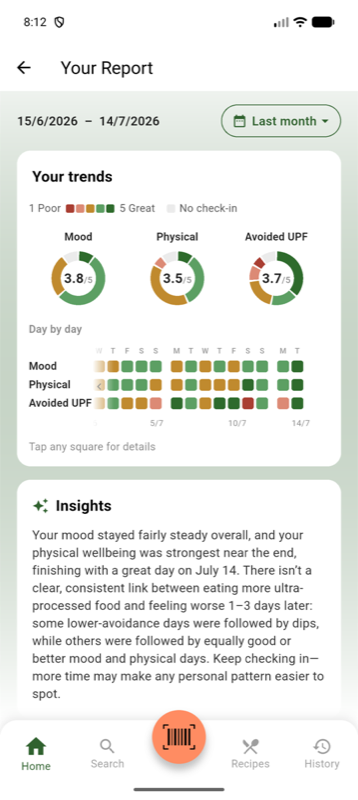
Nomi monthly wellbeing report
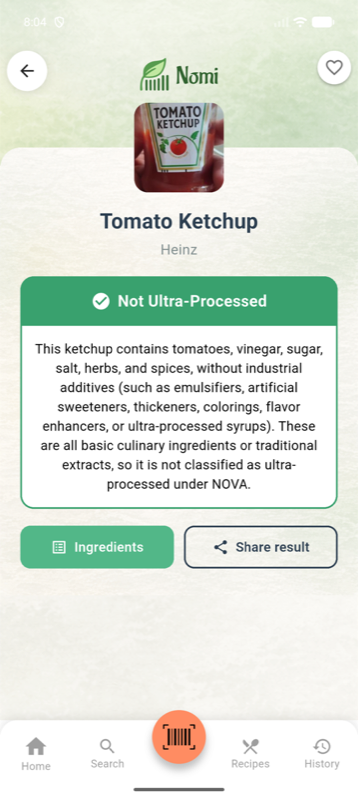
Nomi scan result screen

Product information comes from public databases and Nomi's own analysis, and may contain errors. Always check the packaging. Ultra-processed classification is based on the NOVA food processing system.

Nomi — UPF Scanner Free on iOS & Android
Get the app