Nomi
UPF Food Scanner
Know what’s really in your food
Get the free app

Spicy Rice Noodles

Barcode 5061035300256
Ultra-Processed Food (UPF)

Yes — Spicy Rice Noodles is ultra-processed.

Classified as ultra-processed because it contains chilli extract, which is an industrially extracted additive ingredient, even though the rest of the ingredients are mostly basic culinary items.

Ingredients

No ultra-processed markers
  • OK
    rice noodles (62% rice, tapioca starch)
  • OK
    chilli paste (35% shallots, soy beans, red chillies, vinegar)
  • OK
    sesame oil (2%)
  • OK
    salt
    Common mineral compound (sodium chloride) used as a seasoning and preservative across cuisines.
  • OK
    sugar
    Granulated sugar derived from sugarcane or sugar beets; a basic, single-ingredient sweetener.
  • OK
    leek (coriander)
  • OK
    dried mushroom
  • OK
    garlic powder
    Dried, ground garlic used as a convenient, concentrated form of garlic flavoring in cooking.
  • OK
    ginger powder
    Ground dried ginger root, a common spice and flavoring. Not UPF as a basic spice/ingredient.
  • OK
    black pepper
    A common spice made from dried peppercorns of the Piper nigrum plant, used to add pungent heat and aroma to dishes.
  • OK
    chilli extract
    Extract derived from chili peppers used to impart heat or flavor.
  • OK
    dried spring onions
    Dried scallions or green onions, used as a dried vegetable seasoning or ingredient.

Common questions about Spicy Rice Noodles

Is Spicy Rice Noodles ultra-processed?

Yes — Spicy Rice Noodles is ultra-processed, so it counts as a UPF (ultra-processed food). Classified as ultra-processed because it contains chilli extract, which is an industrially extracted additive ingredient, even though the rest of the ingredients are mostly basic culinary items.

What does "ultra-processed" (UPF) mean?

Ultra-processed foods (UPFs) are industrial formulations made with ingredients and additives you wouldn't find in a home kitchen — such as emulsifiers, artificial flavourings, colourings and modified starches. The classification is based on the NOVA system used by researchers and dietitians worldwide.

How can I check whether other foods are ultra-processed?

Scan any barcode — or photograph the ingredients label — with the free Nomi app for iOS and Android. You'll get an instant ultra-processed verdict with every ingredient explained in plain English.

BBC As seen on The One Show

Scan it yourself,
right in the aisle

This page was shared from Nomi, the free app that tells you instantly whether any food is ultra-processed.

  • Scan any barcode — or photograph the ingredients label
  • Every ingredient explained in plain English
  • Daily check-ins show how food affects how you feel
  • Save favourites and build a healthier shopping list

Free download · No subscription needed to start scanning
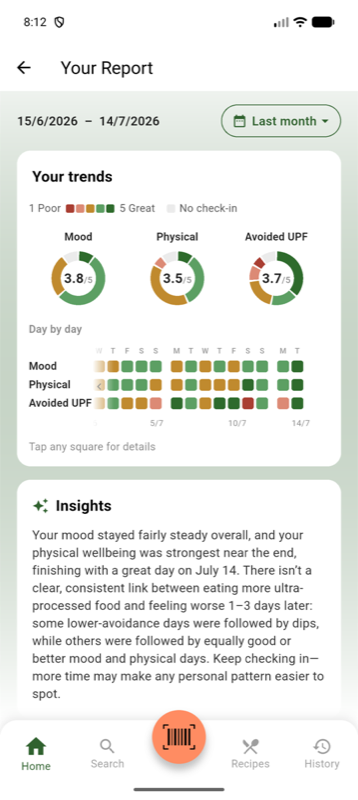
Nomi monthly wellbeing report
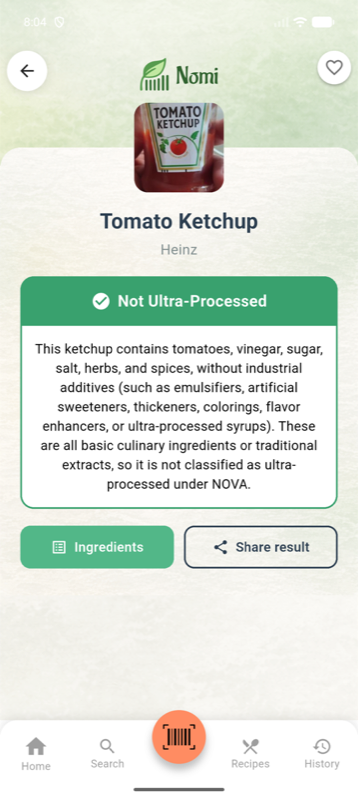
Nomi scan result screen

Product information comes from public databases and Nomi's own analysis, and may contain errors. Always check the packaging. Ultra-processed classification is based on the NOVA food processing system.

Nomi — UPF Scanner Free on iOS & Android
Get the app