Nomi
UPF Food Scanner
Know what’s really in your food
Get the free app
Multigrain Loaf by Promise Gluten Free
Promise Gluten Free

Multigrain Loaf

Barcode 5391526414385
Scanned  48  times by Nomi users
Ultra-Processed Food (UPF)

Yes — Multigrain Loaf is ultra-processed.

The product is ultra-processed because it contains several industrial additives and refined ingredients, including humectant: glycerine, hydroxypropyl methyl cellulose, sodium carboxymethyl cellulose, methyl cellulose, xanthan gum, natural flavouring, sodium propionate, sorbic acid, and acidity regulator: sodium carbonate. These emulsifiers, thickeners, preservatives, and flavourings are characteristic of NOVA group 4 ultra-processed foods.

Ingredients

6 ultra-processed markers
  • OK
    water
    Essential base ingredient for countless foods and beverages; serves as solvent and texture modifier.
  • OK
    rice flour
    A finely milled flour from milled rice, commonly used as a gluten-free thickener or flour substitute in baking and cooking.
  • OK
    tapioca starch
    Starch extracted from cassava (tapioca root), used as a thickener and binder.
  • UPF
    humectant: glycerine
    Glycerine (glycerol) used as a humectant and moisture-retaining additive in foods; a simple, purified sugar alcohol used as an ingredient.
  • OK
    seeds (7%) (sunflower seed, golden millet seed, brown linseed, poppy seed, quinoa)
  • OK
    maize starch
    Fine white powder obtained from corn; used as a thickener in sauces and soups.
  • OK
    yeast
    A living microorganism used as a leavening agent in baking.
  • OK
    sugar cane fibre
  • OK
    potato starch
    A basic, finely ground starch derived from potatoes; used as a thickener and binder in foods.
  • OK
    rapeseed oil
    A basic culinary oil pressed from rapeseeds (Brassica napus). Used for frying, baking, and dressings. Neutral flavor.
  • OK
    psyllium husk powder
    Soluble dietary fiber from Plantago ovata husks used as a thickener and bulking agent.
  • OK
    egg white powder
  • OK
    thickeners: hydroxypropyl methyl cellulose
  • OK
    sodium carboxymethyl cellulose
  • UPF
    methyl cellulose
    A cellulose-derived thickener/additive used to improve texture in processed foods.
  • UPF
    xanthan gum
    A microbial polysaccharide used as a thickener and stabilizer; widely used food additive.
  • OK
    spirit vinegar
    A clear, distilled vinegar typically made from fermented alcohol (ethanol) and used for pickling, flavoring, and preservation.
  • OK
    prune purée
  • OK
    black treacle
    A dark, viscous syrup produced during sugar refining; used as a sweetener and flavoring in baking and desserts.
  • OK
    sugar beet fibre
  • OK
    iodised salt (salt, potassium iodate)
  • UPF
    pea protein
    Protein derived from yellow peas, often sold as powder or isolate for texturizing and fortification.
  • OK
    preservatives: sodium propionate
  • UPF
    sorbic acid
    A preservative used to prevent mold and yeast growth in foods. It is a pure chemical compound often added to foods.
  • OK
    sugar
    Granulated sugar derived from sugarcane or sugar beets; a basic, single-ingredient sweetener.
  • OK
    rice starch
    Starch derived from rice used as a thickener or anti-caking agent in foods.
  • OK
    concentrated grape juice
    Juice derived from grapes that has been concentrated by removing water, used as a sweetening or flavoring ingredient.
  • OK
    wholegrain maize flour
    Milled flour made from the whole kernels of maize (corn), used in baking and cooking as a staple grain product.
  • OK
    rice bran
    Outer outer layer of rice grain contains dietary fiber, fats, and micronutrients; commonly used as an ingredient or supplement in cereals, baking, or added to foods.
  • OK
    acidity regulator: sodium carbonate
  • OK
    folic acid
    A B-vitamin (B9) important for DNA synthesis and red blood cell formation; commonly added to fortified foods and supplements.
  • OK
    thiamine
    A water-soluble B vitamin (vitamin B1) used as a nutrient and fortification additive.
  • UPF
    natural flavouring
    A generic flavoring ingredient derived from natural sources used to impart aroma or taste; may include essential oils or extracts.

Healthier alternatives

Reviewed by Nomi

Similar products that aren't ultra-processed — swap and keep the flavour.

Swap it for something less processed

See all Drinks →

Other drinks Nomi has checked — these ones aren't ultra-processed.
Common questions about Multigrain Loaf

Is Multigrain Loaf ultra-processed?

Yes — Multigrain Loaf by Promise Gluten Free is ultra-processed, so it counts as a UPF (ultra-processed food). The product is ultra-processed because it contains several industrial additives and refined ingredients, including humectant: glycerine, hydroxypropyl methyl cellulose, sodium carboxymethyl cellulose, methyl cellulose, xanthan gum, natural flavouring, sodium propionate, sorbic acid, and acidity regulator: sodium carbonate. These emulsifiers, thickeners, preservatives, and flavourings are characteristic of NOVA group 4 ultra-processed foods.

Which ingredients in Multigrain Loaf are ultra-processed?

Nomi flags 6 ingredients in Multigrain Loaf as ultra-processed markers: humectant: glycerine, methyl cellulose, xanthan gum, pea protein, sorbic acid, natural flavouring. See the full ingredient breakdown above for what each one is.

What are healthier alternatives to Multigrain Loaf?

Nomi has reviewed similar products that are not ultra-processed, including SLICED WHITE SOURDOUGH BREAD WITH GRAINS & SEEDS by JASONS SOURDOUGH, seven seeds and grains sourdough by Bertinet Bakery, Hand Finished Oat, Sunflower & Pumpkin Loaf by Coop Irresistible. See the healthier alternatives above for details.

What does "ultra-processed" (UPF) mean?

Ultra-processed foods (UPFs) are industrial formulations made with ingredients and additives you wouldn't find in a home kitchen — such as emulsifiers, artificial flavourings, colourings and modified starches. The classification is based on the NOVA system used by researchers and dietitians worldwide.

How can I check whether other foods are ultra-processed?

Scan any barcode — or photograph the ingredients label — with the free Nomi app for iOS and Android. You'll get an instant ultra-processed verdict with every ingredient explained in plain English.

BBC As seen on The One Show

Scan it yourself,
right in the aisle

This page was shared from Nomi, the free app that tells you instantly whether any food is ultra-processed.

  • Scan any barcode — or photograph the ingredients label
  • Every ingredient explained in plain English
  • Daily check-ins show how food affects how you feel
  • Save favourites and build a healthier shopping list

Free download · No subscription needed to start scanning
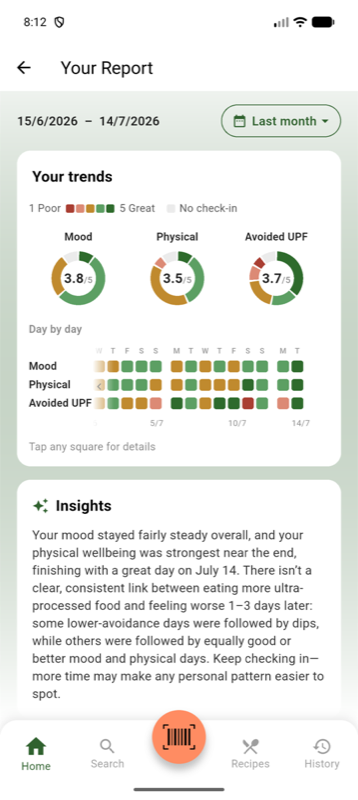
Nomi monthly wellbeing report
Nomi scan result screen

Product information comes from public databases and Nomi's own analysis, and may contain errors. Always check the packaging. Ultra-processed classification is based on the NOVA food processing system.

Nomi — UPF Scanner Free on iOS & Android
Get the app