Nomi
UPF Food Scanner
Know what’s really in your food
Get the free app
Cod katsu fishcakes by Marks & Spencer
Marks & Spencer

Cod katsu fishcakes

Barcode 29078912
Ultra-Processed Food (UPF)

Yes — Cod katsu fishcakes is ultra-processed.

The product is classified as ultra-processed because it contains several UPF ingredients and additives. Specifically, modified tapioca starch and yeast extract are industrially processed additives used for texture and flavor enhancement, respectively, and are explicitly considered UPF. These ingredients go beyond basic culinary components, so under NOVA this product is an ultra-processed food.

Ingredients

4 ultra-processed markers
  • OK
    cod (fish)
    A white fish commonly used in seafood dishes. The 38% indicates the proportion in a composite product.
  • OK
    wheat flour (contains gluten)
    Ground wheat flour; contains gluten. Includes added minerals/vitamins as part of enrichment.
  • OK
    water
    Essential base ingredient for countless foods and beverages; serves as solvent and texture modifier.
  • OK
    potatoes
    Starchy root vegetable used worldwide.
  • OK
    rapeseed oil
    A basic culinary oil pressed from rapeseeds (Brassica napus). Used for frying, baking, and dressings. Neutral flavor.
  • OK
    potato flakes
    Dried flakes of potato used as a base pantry ingredient or as a thickener in soups and mashed potato preparations.
  • OK
    wheat starch (contains gluten)
    Fine, white starch derived from wheat; a gluten-containing carbohydrate used as a thickener or binder in many foods.
  • OK
    durum wheat semolina (contains gluten)
    Coarsely ground durum wheat used to make pasta and various baked goods; gluten-containing.
  • OK
    onions
    A bulbous vegetable used as a staple aromatic and flavoring in many cuisines.
  • OK
    coconut milk
    A traditional dairy-free milk alternative made from the grated meat of coconuts and water; typically used in Southeast Asian cuisine and desserts.
  • OK
    single cream
    A light dairy cream with about 18–20% fat, commonly used in coffee or as a pouring cream in desserts.
  • OK
    salt
    Common mineral compound (sodium chloride) used as a seasoning and preservative across cuisines.
  • OK
    wheat gluten
    Gluten from wheat; a protein complex used as a food ingredient to provide elasticity and structure in doughs and meat substitutes (e.g., seitan).
  • OK
    whipping cream
    A dairy cream with around 30–36% fat, suitable for whipping and making desserts like mousse and toppings.
  • OK
    garlic purée
    Pureed garlic, often used as a flavoring base.
  • OK
    ginger purée
    A smooth paste made from ginger, used to impart ginger flavor in sauces and dishes.
  • OK
    sugar
    Granulated sugar derived from sugarcane or sugar beets; a basic, single-ingredient sweetener.
  • OK
    coriander (cilantro seeds)
    Dried seeds of the coriander plant (Coriandrum sativum). Warm, citrusy flavor used ground or as whole seeds in spice blends and curries.
  • OK
    lemon juice
    The clear, acidic juice extracted from lemons, used for brightness and acidity in foods and drinks.
  • OK
    fish gelatin
    A gel-forming protein extract derived from fish collagen, used as a gelling agent in foods.
  • OK
    ground spices (turmeric, coriander, cumin, black pepper, white pepper)
    A blend of ground spices commonly used for flavoring, including turmeric, coriander, cumin, black pepper and white pepper.
  • OK
    red chillies
    Chili peppers used whole or dried to add heat and flavor to dishes.
  • UPF
    modified tapioca starch
    A starch derivative used as a thickener and texturizer; a processed ingredient.
  • OK
    inactive yeast
    A non-viable yeast used as a leavening or nutrient supplement; may contain gluten due to barley and wheat ingredients.
  • UPF
    yeast extract
    A flavor-enhancing extract produced from yeast cells, rich in amino acids and natural glutamates, commonly used to augment savory flavors.
  • OK
    rice vinegar
    A mild vinegar made from fermented rice—used to season dishes, pickles, and dressings with a subtle sweet and tangy note.
  • OK
    yeast
    A living microorganism used as a leavening agent in baking.
  • OK
    lime juice
    Juice extracted from limes; a basic culinary ingredient used for acidity and flavor.
  • OK
    soybeans
    Dried seeds of the soybean, used to make soy products like tofu, soy milk, and soy sauce.
  • OK
    coriander seeds
    Dried seeds of the cilantro plant (Coriandrum sativum) used whole or crushed to add warm, citrusy, spicy notes.
  • OK
    apple purée
    Puree made from apples, a simple fruit product that may be used as a base or sweetener in foods.
  • OK
    dried onions
    Dehydrated onion flakes or powder used to impart onion flavour; essentially a preserved form of a basic vegetable.
  • OK
    fenugreek seeds
    Small, crunchy seeds with a warm, slightly bitter, nutty aroma used whole or ground in spice blends and curries.
  • OK
    dried garlic
    Dehydrated garlic cloves ground or whole, used as a pungent seasoning with long shelf life.
  • OK
    vinegar
    A sour-tasting liquid produced by fermentation, widely used as a condiment and preservative.
  • OK
    cumin seeds
    Flat, boat-shaped seeds from the cumin plant, offering a warm, earthy, citrusy aroma used in spice blends and cooking.
  • UPF
    paprika extract
    A concentrated pigment derived from paprika used as a colorant in foods.
  • OK
    cardamom
    A small aromatic seed (or pod) used as a spice with a strong, sweet, floral and citrusy aroma.
  • OK
    star anise
    A dried fruit of Illicium verum, used whole or ground as a spice and flavoring.
  • UPF
    black pepper extract
    A concentrated extract from black pepper used to impart aroma and slight heat.
  • OK
    cloves
    Dried flower buds of the Syzygium aromaticum, with a warm, pungent, sweet-spicy flavor used whole or ground in spice blends and dishes.
  • OK
    fennel seeds
    Dried seeds of the Foeniculum vulgare plant, with a sweet, licorice-like flavor; used whole or ground in baking, cooking, and as a spice.
  • OK
    dill seeds
    Small, aromatic seeds of the Anethum graveolens plant, offering a fresh, slightly bitter, aniselike taste; common in pickling, seasoning blends, and breads.
  • OK
    ginger
    A pungent, aromatic rhizome used fresh or dried in cooking and beverages.
  • OK
    sunflower oil
    A neutral-tasting culinary oil pressed from sunflower seeds, rich in unsaturated fats and commonly used for frying and dressings.
  • OK
    celery seeds
    Dried seeds of the celery plant (Apium graveolens); a pungent, celery-like spice used to flavor dishes and pickles.

Swap it for something less processed

See all Fish & Seafood →

Other fish & seafood Nomi has checked — these ones aren't ultra-processed.

Common questions about Cod katsu fishcakes

Is Cod katsu fishcakes ultra-processed?

Yes — Cod katsu fishcakes by Marks & Spencer is ultra-processed, so it counts as a UPF (ultra-processed food). The product is classified as ultra-processed because it contains several UPF ingredients and additives. Specifically, modified tapioca starch and yeast extract are industrially processed additives used for texture and flavor enhancement, respectively, and are explicitly considered UPF. These ingredients go beyond basic culinary components, so under NOVA this product is an ultra-processed food.

Which ingredients in Cod katsu fishcakes are ultra-processed?

Nomi flags 4 ingredients in Cod katsu fishcakes as ultra-processed markers: modified tapioca starch, yeast extract, paprika extract, black pepper extract. See the full ingredient breakdown above for what each one is.

What does "ultra-processed" (UPF) mean?

Ultra-processed foods (UPFs) are industrial formulations made with ingredients and additives you wouldn't find in a home kitchen — such as emulsifiers, artificial flavourings, colourings and modified starches. The classification is based on the NOVA system used by researchers and dietitians worldwide.

How can I check whether other foods are ultra-processed?

Scan any barcode — or photograph the ingredients label — with the free Nomi app for iOS and Android. You'll get an instant ultra-processed verdict with every ingredient explained in plain English.

BBC As seen on The One Show

Scan it yourself,
right in the aisle

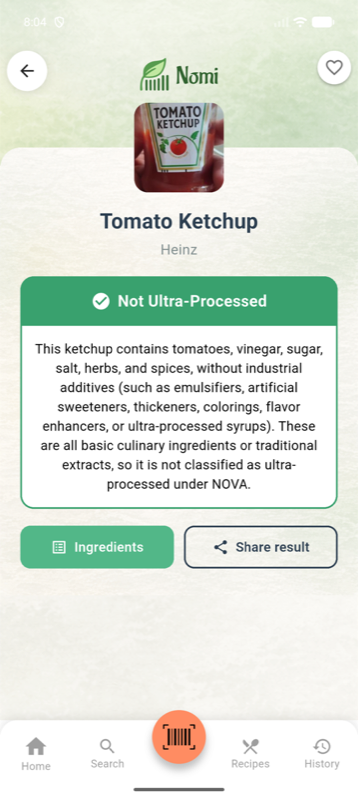
This page was shared from Nomi, the free app that tells you instantly whether any food is ultra-processed.

  • Scan any barcode — or photograph the ingredients label
  • Every ingredient explained in plain English
  • Daily check-ins show how food affects how you feel
  • Save favourites and build a healthier shopping list

Free download · No subscription needed to start scanning

Nomi monthly wellbeing report
Nomi scan result screen

Product information comes from public databases and Nomi's own analysis, and may contain errors. Always check the packaging. Ultra-processed classification is based on the NOVA food processing system.

Nomi — UPF Scanner Free on iOS & Android
Get the app