Nomi
UPF Food Scanner
Know what’s really in your food
Get the free app

Vitamin Supplement

Barcode 4088600444765
Ultra-Processed Food (UPF)

Yes — Vitamin Supplement is ultra-processed.

The ingredient list contains several ultra-processed additives according to NOVA, including maltodextrin, modified maize starch, dextrose syrup, acacia gum, mono- and diglycerides of fatty acids, and various cellulose and hydroxypropyl methyl cellulose. These are industrial formulations and processing aids, so the product is classified as ultra-processed (UPF).

Ingredients

7 ultra-processed markers
  • OK
    calcium carbonate
    A basic inorganic calcium salt used as a nutrition supplement and anticaking agent in foods.
  • OK
    tricalcium phosphate
    A calcium salt used as a food additive and calcium source; commonly used as anti-caking agent in powders and as a mineral supplement.
  • OK
    ascorbic acid (vitamin c)
    A water-soluble vitamin (vitamin C) used as an antioxidant and preservative in foods.
  • UPF
    cellulose
    A natural plant-derived polymer used as a bulking agent, thickener, or texturizer in foods; often processed to fine powder.
  • UPF
    maltodextrin
    A white powder made from starch that has been partially hydrolyzed; used as a thickener or filler and widely used as a food additive.
  • OK
    ferrous fumarate
    A iron(II) salt used as a fortifying mineral in foods and dietary supplements.
  • UPF
    modified maize starch
    A processed starch, often used as a thickener or binding agent in foods; may be treated to modify properties.
  • OK
    dl-alpha tocopherol (vitamin e)
    A synthetic form of vitamin E used as a nutrient supplement and sometimes as a stabilizer in foods.
  • UPF
    hydroxypropyl methylcellulose (hpmc)
    A semi-synthetic polymer used as a thickener, emulsifier, and stabilizer in food products.
  • OK
    zinc oxide
    An inorganic zinc compound used as a fortifying mineral in foods or dietary supplements.
  • OK
    calcium pantothenate
    A water-soluble calcium salt of pantothenic acid (Vitamin B5), used as a dietary supplement and nutrient fortificant.
  • OK
    manganese(ii) sulfate
    A manganese supplement used to supply manganese for nutrition and fortification; essential trace mineral.
  • UPF
    dextrose syrup (glucose syrup)
    A syrup rich in glucose obtained from starch hydrolysis; a refined sweetener and thickening agent.
  • OK
    acacia gum (gum arabic)
    A natural hydrocolloid from acacia trees used as a thickener and stabilizer.
  • OK
    maize starch
    Fine white powder obtained from corn; used as a thickener in sauces and soups.
  • OK
    pyridoxine hydrochloride (vitamin b6 hydrochloride)
    A salt form of vitamin B6 used as a nutrient supplement and dietary additive. It is not a common standalone food ingredient but is used for fortification.
  • OK
    thiamine mononitrate (vitamin b1)
    A stable form of vitamin B1 used as a nutrient supplement and food additive in fortification and enrichment.
  • OK
    vitamin a acetate
    A pre-formed vitamin A (retinol) ester used as a dietary supplement or fortifying agent; commonly found in fortified foods and cosmetic formulations.
  • OK
    folic acid
    A B-vitamin (B9) important for DNA synthesis and red blood cell formation; commonly added to fortified foods and supplements.
  • OK
    dl-alpha-tocopherol
    A synthetic form of Vitamin E (tocopherol) used as an antioxidant and fortifying ingredient; a single-ingredient nutrient often added to foods and supplements.
  • OK
    potassium iodide
    A simple inorganic salt used as a source of iodine in food fortification and dietary supplements; also used in medical applications.
  • OK
    chromium chloride
    Inorganic chromium salt used as a trace mineral supplement or fortification ingredient in some foods/supplements.
  • UPF
    mono- and diglycerides of fatty acids
    Emulsifier made from glycerol and fatty acids, used to improve texture and stability in baked goods, non-dairy creamers, and margarines.
  • UPF
    sodium ascorbate
    Sodium salt of ascorbic acid (vitamin C) used as an antioxidant in foods and beverages.
  • OK
    cholecalciferol (vitamin d3)
    A fat-soluble vitamin used as a dietary supplement and fortifying additive in foods to support bone health and calcium metabolism.
  • OK
    vitamin b12
    A water-soluble B vitamin (cobalamin) used as a nutrient fortifier in foods and supplements.

Swap it for something less processed

See all Cupboard Staples →

Other cupboard staples Nomi has checked — these ones aren't ultra-processed.

Common questions about Vitamin Supplement

Is Vitamin Supplement ultra-processed?

Yes — Vitamin Supplement is ultra-processed, so it counts as a UPF (ultra-processed food). The ingredient list contains several ultra-processed additives according to NOVA, including maltodextrin, modified maize starch, dextrose syrup, acacia gum, mono- and diglycerides of fatty acids, and various cellulose and hydroxypropyl methyl cellulose. These are industrial formulations and processing aids, so the product is classified as ultra-processed (UPF).

Which ingredients in Vitamin Supplement are ultra-processed?

Nomi flags 7 ingredients in Vitamin Supplement as ultra-processed markers: cellulose, maltodextrin, modified maize starch, hydroxypropyl methylcellulose (hpmc), dextrose syrup (glucose syrup), mono- and diglycerides of fatty acids, sodium ascorbate. See the full ingredient breakdown above for what each one is.

What does "ultra-processed" (UPF) mean?

Ultra-processed foods (UPFs) are industrial formulations made with ingredients and additives you wouldn't find in a home kitchen — such as emulsifiers, artificial flavourings, colourings and modified starches. The classification is based on the NOVA system used by researchers and dietitians worldwide.

How can I check whether other foods are ultra-processed?

Scan any barcode — or photograph the ingredients label — with the free Nomi app for iOS and Android. You'll get an instant ultra-processed verdict with every ingredient explained in plain English.

BBC As seen on The One Show

Scan it yourself,
right in the aisle

This page was shared from Nomi, the free app that tells you instantly whether any food is ultra-processed.

  • Scan any barcode — or photograph the ingredients label
  • Every ingredient explained in plain English
  • Daily check-ins show how food affects how you feel
  • Save favourites and build a healthier shopping list

Free download · No subscription needed to start scanning
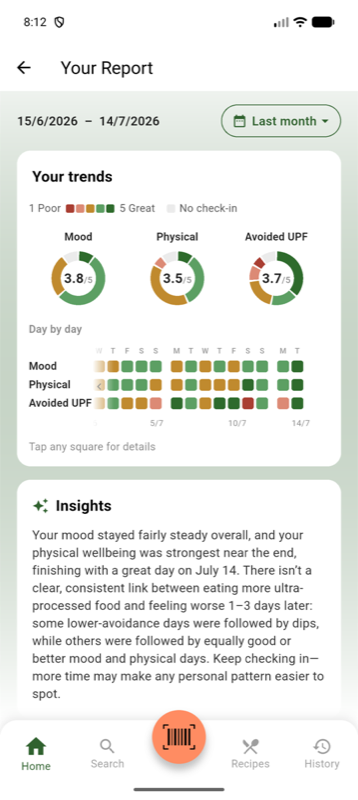
Nomi monthly wellbeing report
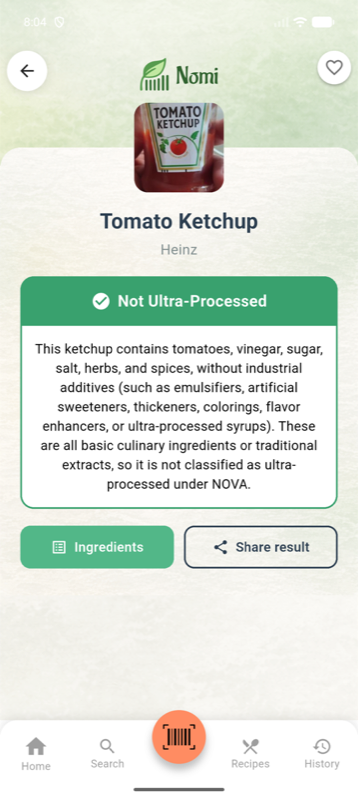
Nomi scan result screen

Product information comes from public databases and Nomi's own analysis, and may contain errors. Always check the packaging. Ultra-processed classification is based on the NOVA food processing system.

Nomi — UPF Scanner Free on iOS & Android
Get the app