Nomi
UPF Food Scanner
Know what’s really in your food
Get the free app
King Prawn Poke by Taiko
Taiko

King Prawn Poke

Barcode 5035272740731
Scanned  5  times by Nomi users
Ultra-Processed Food (UPF)

Yes — King Prawn Poke is ultra-processed.

The product is ultra-processed because it contains several industrial ingredients and additives, including cooked rice containing fructose-glucose syrup, palm oil, oligofructose syrup, and modified maize starch. These are industrially processed components and additives characteristic of NOVA ultra-processed foods.

Ingredients

4 ultra-processed markers
  • UPF
    cooked rice
    Cooked rice with added ingredients including sugar, syrups and molasses for flavor and texture; a prepared grain product.
  • OK
    king prawns
    Large crustacean seafood; common in many cuisines, often sold peeled or with shells; salt indicates simple seasoning.
  • OK
    avocado
    Ripe avocado fruit; creamy, nutrient-rich ingredient used in dishes and spreads.
  • OK
    seaweed
    Edible marine algae used as a food ingredient, often in sushi, soups, and salads; typically sold dried or hydrated.
  • OK
    water
    Essential base ingredient for countless foods and beverages; serves as solvent and texture modifier.
  • OK
    pickled red cabbage
    Cabbage that has been pickled in a solution of vinegar and seasonings (including sugar and salt).
  • OK
    onion
    A common bulb vegetable used as a base flavor in many cuisines. Crisp, pungent, sweet when cooked.
  • OK
    carrot
    A root vegetable used widely in cooking for sweetness, texture, and color.
  • OK
    sugar
    Granulated sugar derived from sugarcane or sugar beets; a basic, single-ingredient sweetener.
  • OK
    rice vinegar
    A mild vinegar made from fermented rice—used to season dishes, pickles, and dressings with a subtle sweet and tangy note.
  • OK
    toasted sesame oil
    A flavorful, nutty oil pressed from toasted sesame seeds commonly used for finishing dishes or in dressings and marinades.
  • OK
    salt
    Common mineral compound (sodium chloride) used as a seasoning and preservative across cuisines.
  • UPF
    palm oil
    A widely used edible oil pressed from the fruit of oil palms; a basic culinary oil but highly processed in many commercial products.
  • OK
    apple cider vinegar
    Fermented liquid produced from apple juice, commonly used in dressings, marinades, and flavoring.
  • OK
    soybeans
    Mature seeds of Glycine max, a legume used to produce many soy-based foods and products.
  • OK
    wheat
    A staple cereal grain used in foods; a basic ingredient in flour, bread, and many products.
  • OK
    wheat flour
    Finely ground cereal flour from wheat; a fundamental baking ingredient.
  • OK
    white sesame seeds
    Tiny edible seeds rich in oil and flavor, used in cooking and as a topping or ingredient.
  • OK
    yuzu juice
    Citrus juice pressed from yuzu, a citrus fruit common in East Asian cuisine. Used for tart, fragrant acidity.
  • OK
    seaweed agar (agar-agar)
    Gel-forming polysaccharide extracted from red algae (seaweed); used as a vegan gelling agent and thickener.
  • OK
    rice wine
    Alcoholic beverage produced by fermentation of rice; used in cooking to add sweetness and alcohol.
  • UPF
    oligofructose syrup
    A syrup containing oligofructose (oligofructose/arabinoxylans) used as a sweetener and bulking agent; often industrially produced.
  • OK
    red chili
    Dried or fresh ripe red peppers used to add heat and flavor to dishes.
  • OK
    wood ear mushrooms
    Edible fungus (Auricularia species), known for crisp texture and used in Chinese cuisine.
  • OK
    tapioca starch
    Starch extracted from cassava (tapioca root), used as a thickener and binder.
  • UPF
    modified maize starch
    A processed starch, often used as a thickener or binding agent in foods; may be treated to modify properties.
  • OK
    onion purée
    A smooth paste made from onions, used to add sweetness and body to dishes.
  • OK
    spirit vinegar
    A clear, distilled vinegar typically made from fermented alcohol (ethanol) and used for pickling, flavoring, and preservation.
  • OK
    apple juice concentrate
    Concentrated apple juice obtained by removing water; used as a sweetener or flavoring ingredient.
  • OK
    ginger purée
    A smooth paste made from ginger, used to impart ginger flavor in sauces and dishes.
  • OK
    alcohol
    A generic alcoholic beverage or ingredient containing ethanol used for flavoring, extraction, or preservation.
  • OK
    lemon juice concentrate
    Concentrated lemon juice, a tart citrus flavoring derived from lemons.
  • OK
    lime juice concentrate
    Concentrated lime juice; a basic fruit juice ingredient used for flavoring and acidity.
  • OK
    garlic powder
    Dried, ground garlic used as a convenient, concentrated form of garlic flavoring in cooking.
  • OK
    white pepper
    A spice ground from ripe peppercorns with the outer husk removed, used to impart mild heat and aroma to dishes.
  • OK
    spirulina
    Dried blue-green algae used as a nutritional ingredient and colorant in foods.

Swap it for something less processed

See all Ready Meals →

Other ready meals Nomi has checked — these ones aren't ultra-processed.

Common questions about King Prawn Poke

Is King Prawn Poke ultra-processed?

Yes — King Prawn Poke by Taiko is ultra-processed, so it counts as a UPF (ultra-processed food). The product is ultra-processed because it contains several industrial ingredients and additives, including cooked rice containing fructose-glucose syrup, palm oil, oligofructose syrup, and modified maize starch. These are industrially processed components and additives characteristic of NOVA ultra-processed foods.

Which ingredients in King Prawn Poke are ultra-processed?

Nomi flags 4 ingredients in King Prawn Poke as ultra-processed markers: cooked rice, palm oil, oligofructose syrup, modified maize starch. See the full ingredient breakdown above for what each one is.

What does "ultra-processed" (UPF) mean?

Ultra-processed foods (UPFs) are industrial formulations made with ingredients and additives you wouldn't find in a home kitchen — such as emulsifiers, artificial flavourings, colourings and modified starches. The classification is based on the NOVA system used by researchers and dietitians worldwide.

How can I check whether other foods are ultra-processed?

Scan any barcode — or photograph the ingredients label — with the free Nomi app for iOS and Android. You'll get an instant ultra-processed verdict with every ingredient explained in plain English.

BBC As seen on The One Show

Scan it yourself,
right in the aisle

This page was shared from Nomi, the free app that tells you instantly whether any food is ultra-processed.

  • Scan any barcode — or photograph the ingredients label
  • Every ingredient explained in plain English
  • Daily check-ins show how food affects how you feel
  • Save favourites and build a healthier shopping list

Free download · No subscription needed to start scanning
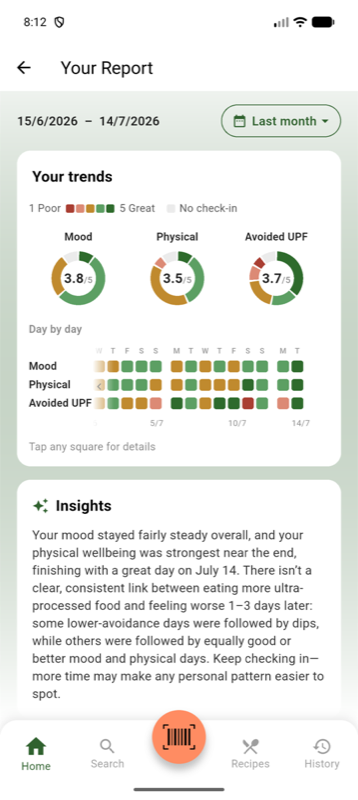
Nomi monthly wellbeing report
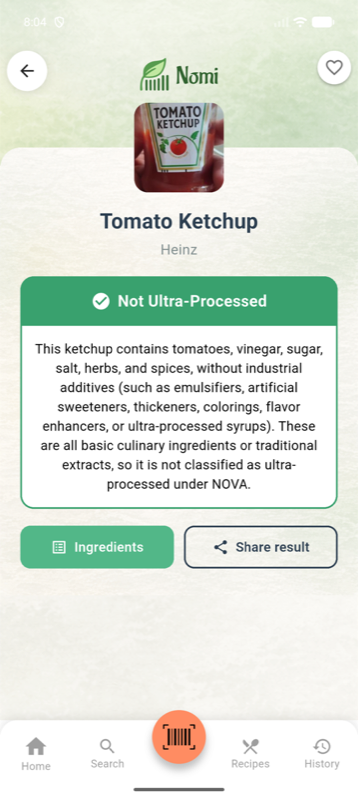
Nomi scan result screen

Product information comes from public databases and Nomi's own analysis, and may contain errors. Always check the packaging. Ultra-processed classification is based on the NOVA food processing system.

Nomi — UPF Scanner Free on iOS & Android
Get the app