Nomi
UPF Food Scanner
Know what’s really in your food
Get the free app
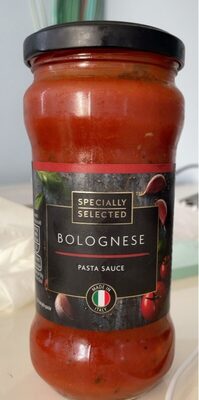
Bolognese Pasta Sauce by Specially Selected, Aldi
Specially Selected, Aldi

Bolognese Pasta Sauce

Barcode 4088600054469
Scanned  36  times by Nomi users
Not Ultra-Processed

No — Bolognese Pasta Sauce is not ultra-processed.

Not ultra-processed. The sauce consists mainly of tomatoes, vegetables, wine, extra virgin olive oil, herbs, spices, salt, sugar, and lactic acid. These are basic culinary ingredients or traditional food components, and no UPF-defining industrial additives such as artificial sweeteners, flavor enhancers, emulsifiers, stabilizers, refined industrial syrups, or hydrogenated/interesterified oils are present. The acidity regulator, lactic acid, is a basic permitted acidulant and does not by itself make the product ultra-processed.

Ingredients

No ultra-processed markers
  • OK
    tomato pulp (34%)
  • OK
    tomato paste (18%)
  • OK
    water
    Essential base ingredient for countless foods and beverages; serves as solvent and texture modifier.
  • OK
    cherry tomato (10%)
  • OK
    vino chianti dop chianti wine (7%)
  • OK
    onions
    CommonAllium vegetable used as a base flavor and aromatics in cooking. Fresh, dried, or cooked onion can be used in many dishes.
  • OK
    carrots
    Root vegetable with orange, sweet-tles; commonly eaten raw, roasted, or added to soups and stews.
  • OK
    celery
    A crunchy, fibrous stalk vegetable commonly used fresh in salads, soups, and as a garnish. Rich in water and nutrients like vitamin K and folate.
  • OK
    extra virgin olive oil (1,5%)
  • OK
    garlic purée (1,5%)
  • OK
    olive oil
    A basic culinary oil pressed from olives, used for cooking, dressing, and flavor.
  • OK
    sugar
    Granulated sugar derived from sugarcane or sugar beets; a basic, single-ingredient sweetener.
  • OK
    salt
    Common mineral compound (sodium chloride) used as a seasoning and preservative across cuisines.
  • OK
    acidity regulator
    Additives used to control acidity (pH) and acidity in foods, such as citric acid, phosphates, sulphates. Generally considered basic food processing aid ingredients; many are allowed in foods and are not in themselves UPF.
  • OK
    lactic acid
    A naturally occurring organic acid used as an acidity regulator and flavoring in foods.
  • OK
    black pepper
    A common spice made from dried peppercorns of the Piper nigrum plant, used to add pungent heat and aroma to dishes.
  • OK
    basil
    A leafy herb used fresh or dried to flavor dishes; not typically processed as a food ingredient beyond drying or freshness.
  • OK
    laurel
  • OK
    oregano
    A dried aromatic herb used as a spice in cooking, with a warm, slightly bitter flavor.
  • OK
    thyme
    A small, woody perennial herb with fragrant leaves used to flavor dishes, soups, and stews.
  • OK
    nutmeg
    A fragrant spice ground from the seeds of the Myristica fragrans tree, used to flavor sweet and savory dishes in small amounts.
  • OK
    allergy advice: for allergens
  • OK
    see ingredients in bold
  • OK
    dietary advice: suitable for vegetarians caution: contains alcohol
  • OK
    no artificial colours
  • OK
    flavourings of preservatives
  • OK
    lid not-071330-001

More in Sauces, Condiments & Spreads

See all Sauces, Condiments & Spreads →

Other sauces, condiments & spreads products Nomi has analysed ingredient by ingredient.

Common questions about Bolognese Pasta Sauce

Is Bolognese Pasta Sauce ultra-processed?

No — Bolognese Pasta Sauce by Specially Selected, Aldi is not ultra-processed, so it is not a UPF (ultra-processed food). Not ultra-processed. The sauce consists mainly of tomatoes, vegetables, wine, extra virgin olive oil, herbs, spices, salt, sugar, and lactic acid. These are basic culinary ingredients or traditional food components, and no UPF-defining industrial additives such as artificial sweeteners, flavor enhancers, emulsifiers, stabilizers, refined industrial syrups, or hydrogenated/interesterified oils are present. The acidity regulator, lactic acid, is a basic permitted acidulant and does not by itself make the product ultra-processed.

What does "ultra-processed" (UPF) mean?

Ultra-processed foods (UPFs) are industrial formulations made with ingredients and additives you wouldn't find in a home kitchen — such as emulsifiers, artificial flavourings, colourings and modified starches. The classification is based on the NOVA system used by researchers and dietitians worldwide.

How can I check whether other foods are ultra-processed?

Scan any barcode — or photograph the ingredients label — with the free Nomi app for iOS and Android. You'll get an instant ultra-processed verdict with every ingredient explained in plain English.

BBC As seen on The One Show

Scan it yourself,
right in the aisle

This page was shared from Nomi, the free app that tells you instantly whether any food is ultra-processed.

  • Scan any barcode — or photograph the ingredients label
  • Every ingredient explained in plain English
  • Daily check-ins show how food affects how you feel
  • Save favourites and build a healthier shopping list

Free download · No subscription needed to start scanning
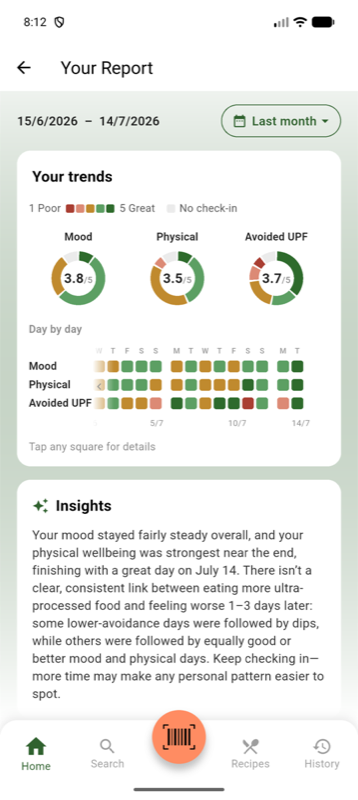
Nomi monthly wellbeing report
Nomi scan result screen

Product information comes from public databases and Nomi's own analysis, and may contain errors. Always check the packaging. Ultra-processed classification is based on the NOVA food processing system.

Nomi — UPF Scanner Free on iOS & Android
Get the app