Nomi
UPF Food Scanner
Know what’s really in your food
Get the free app

Vegetable Buns

Barcode 5063210066827
Ultra-Processed Food (UPF)

Yes — Vegetable Buns is ultra-processed.

Classified as ultra-processed because it contains industrial additives and refined ingredients including: refined soya bean oil (highly processed refined oil), colours (beetroot red, paprika extract, plain caramel – added colourings), and raising agents (sodium bicarbonate, disodium diphosphate, monocalcium phosphate – multiple leavening agents). These go beyond basic culinary ingredients and fit NOVA’s criteria for ultra-processed products.

Ingredients

2 ultra-processed markers
  • OK
    wheat flour
    Finely ground cereal flour from wheat; a fundamental baking ingredient.
  • OK
    water
    Essential base ingredient for countless foods and beverages; serves as solvent and texture modifier.
  • OK
    sugar
    Granulated sugar derived from sugarcane or sugar beets; a basic, single-ingredient sweetener.
  • OK
    carrot
    A root vegetable, crisp and orange, commonly used raw or cooked.
  • OK
    cabbage
    A leafy green or purple cruciferous vegetable, used raw in slaws or cooked.
  • OK
    onion
    A common bulb vegetable used as a base flavor in many cuisines. Crisp, pungent, sweet when cooked.
  • OK
    oyster mushroom
    A delicate edible mushroom with a fan-shaped cap, used in soups and stir-fries.
  • OK
    corn starch
    A refined starch extracted from corn, used as a thickening agent in foods.
  • OK
    water chestnut (3%)
    A whole-food ingredient from the water chestnut plant, used for crunch and texture.
  • OK
    king oyster mushroom (2%)
    A cultivated edible mushroom used for texture and flavor in dishes.
  • UPF
    soy protein
    A protein extracted from soybeans, often used as a meat substitute or texturized protein. It is a processed soy product.
  • OK
    refined soybean oil
    A refined oil extracted from soybeans, used as a cooking oil or ingredient. It is a basic culinary oil after refining.
  • OK
    tapioca starch
    Starch extracted from cassava (tapioca root), used as a thickener and binder.
  • UPF
    colours (beetroot red, paprika extract, plain caramel)
    A blend of color additives including beetroot red, paprika extract, and plain caramel used for coloring foods.
  • OK
    garlic
    A bulbous aromatic spice used to impart savory flavor in cooking; can be used fresh, sautéed, roasted, or in powder form.
  • OK
    sesame seed oil
    Oil pressed from sesame seeds, used for cooking and flavor; common in Asian cuisines; can be refined or unrefined.
  • OK
    salt
    Common mineral compound (sodium chloride) used as a seasoning and preservative across cuisines.
  • OK
    yeast
    A living microorganism used as a leavening agent in baking.
  • OK
    plum
    A stone fruit produced by Prunus domestica/douz, sweet-tart fruit eaten fresh or used in jams and cooking.
  • OK
    ginger
    A pungent, aromatic rhizome used fresh or dried in cooking and beverages.
  • OK
    soybean
    A legume native to East Asia; edible seeds used for oil, tofu, soy products, and animal feed.
  • OK
    raising agents (sodium bicarbonate, disodium diphosphate, monocalcum phosphate)
    A mixture of leavening agents used to make dough rise; sodium bicarbonate is a baking soda, disodium diphosphate and monocalcium phosphate act as acid salts to release carbon dioxide.
  • OK
    rice vinegar
    A mild vinegar made from fermented rice—used to season dishes, pickles, and dressings with a subtle sweet and tangy note.
  • OK
    rice
    A basic staple grain consumed worldwide, used in a wide range of dishes.
  • OK
    anise
    Dried seeds of Pimpinella anisum, used as a spice for flavoring in many cuisines.
  • OK
    black pepper
    A common spice made from dried peppercorns of the Piper nigrum plant, used to add pungent heat and aroma to dishes.
  • OK
    activated charcoal powder
    A fine powder made from activated charcoal, sometimes used as a food colorant or detox ingredient in small amounts; sourced from carbon-rich materials and processed to have a porous structure.
  • OK
    ground cinnamon
    A finely ground spice obtained from the inner bark of Cinnamomum trees, with warm, sweet-aromatic flavor used for seasoning and baking.
  • OK
    fennel powder
    A finely ground powder made from fennel seeds, with a sweet-anise flavor used in cooking and seasoning.
  • OK
    paprika
    A ground spice made from dried red peppers (Capsicum species), used for color and flavor in many cuisines.
  • OK
    szechuan pepper
    A spice from the husks of prickly ash berries, known for its tingling, numbing sensation and citrusy notes commonly used in Sichuan cuisine.
  • OK
    clove powder
    A finely ground spice made from dried flower buds of the clove tree (Syzygium aromaticum), used for warm, aromatic flavoring.
  • OK
    nutmeg
    A fragrant spice ground from the seeds of the Myristica fragrans tree, used to flavor sweet and savory dishes in small amounts.
  • OK
    chilli powder
    Ground dried chili peppers used as a spice to add heat and flavor in dishes. It is a basic single-ingredient spice.

Swap it for something less processed

See all Ready Meals →

Other ready meals Nomi has checked — these ones aren't ultra-processed.

Common questions about Vegetable Buns

Is Vegetable Buns ultra-processed?

Yes — Vegetable Buns is ultra-processed, so it counts as a UPF (ultra-processed food). Classified as ultra-processed because it contains industrial additives and refined ingredients including: refined soya bean oil (highly processed refined oil), colours (beetroot red, paprika extract, plain caramel – added colourings), and raising agents (sodium bicarbonate, disodium diphosphate, monocalcium phosphate – multiple leavening agents). These go beyond basic culinary ingredients and fit NOVA’s criteria for ultra-processed products.

Which ingredients in Vegetable Buns are ultra-processed?

Nomi flags 2 ingredients in Vegetable Buns as ultra-processed markers: soy protein, colours (beetroot red, paprika extract, plain caramel). See the full ingredient breakdown above for what each one is.

What does "ultra-processed" (UPF) mean?

Ultra-processed foods (UPFs) are industrial formulations made with ingredients and additives you wouldn't find in a home kitchen — such as emulsifiers, artificial flavourings, colourings and modified starches. The classification is based on the NOVA system used by researchers and dietitians worldwide.

How can I check whether other foods are ultra-processed?

Scan any barcode — or photograph the ingredients label — with the free Nomi app for iOS and Android. You'll get an instant ultra-processed verdict with every ingredient explained in plain English.

BBC As seen on The One Show

Scan it yourself,
right in the aisle

This page was shared from Nomi, the free app that tells you instantly whether any food is ultra-processed.

  • Scan any barcode — or photograph the ingredients label
  • Every ingredient explained in plain English
  • Daily check-ins show how food affects how you feel
  • Save favourites and build a healthier shopping list

Free download · No subscription needed to start scanning
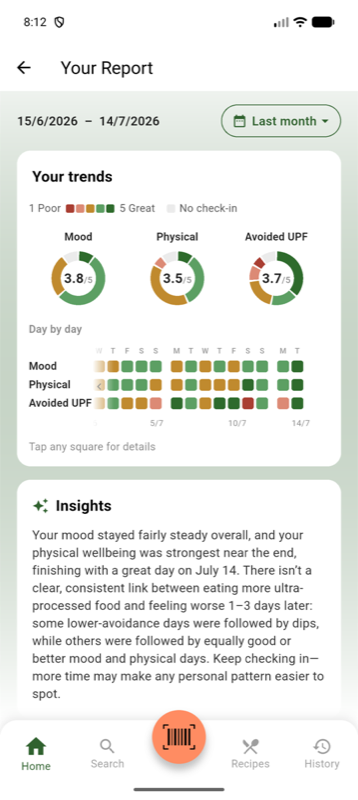
Nomi monthly wellbeing report
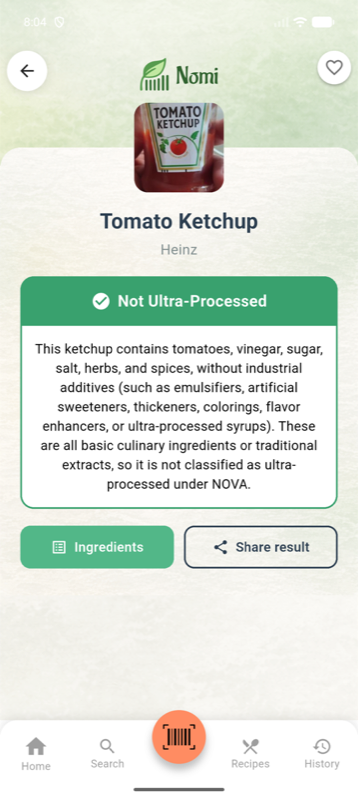
Nomi scan result screen

Product information comes from public databases and Nomi's own analysis, and may contain errors. Always check the packaging. Ultra-processed classification is based on the NOVA food processing system.

Nomi — UPF Scanner Free on iOS & Android
Get the app