Nomi
UPF Food Scanner
Know what’s really in your food
Get the free app
No Duck Hoisin by plant MADE
plant MADE

No Duck Hoisin

Barcode 5045092208335
Ultra-Processed Food (UPF)

Yes — No Duck Hoisin is ultra-processed.

Not a great choice for everyday.

This product is ultra-processed because it contains several industrially processed ingredients and additives. The contributing ingredients include palm fat and palm stearin, which are refined palm-derived fats; acidity regulators malic acid and acetic acid, which are pre-identified UPF ingredients; flavouring; yeast extract, a flavour enhancer; and malted barley extract, an industrially processed extract used as a flavour enhancer. The seasoned wheat gluten and soy protein pieces, stock powder, and ready-to-eat meat-alternative filling also indicate industrial formulation. Fortified wheat flour, sugar, vegetable oils such as rapeseed oil, raising agents, spices, and traditional fermented sauces do not independently determine the classification.

Ingredients

9 ultra-processed markers
  • OK
    wheat wrap
    A bread-like wrap made from fortified wheat flour, typically used for sandwiches and tortillas. The fortification adds minerals and vitamins.
  • OK
    water
    Essential base ingredient for countless foods and beverages; serves as solvent and texture modifier.
  • UPF
    palm oil
    Palm oil derived from palm fruit, used as a cooking oil and ingredient in many processed foods.
  • OK
    rapeseed
    A basic agricultural oilseed used to produce rapeseed oil; commonly pressed or extracted for cooking. Used as a culinary ingredient.
  • UPF
    raising agents (e500, e450)
    Leavening agents comprised of sodium bicarbonate (E500) and diphosphates (E450); these are refined additives used to help baked goods rise.
  • OK
    sugar
    Granulated sugar derived from sugarcane or sugar beets; a basic, single-ingredient sweetener.
  • UPF
    malic acid
    An acidity regulator and flavor modifier often used as a food additive; isolated/synthesized.
  • OK
    salt
    Common mineral compound (sodium chloride) used as a seasoning and preservative across cuisines.
  • OK
    wheat starch
    Starch derived from wheat; a refined carbohydrate used as a thickener or filler in foods.
  • OK
    wheat flour
    Ground wheat used as a basic baking ingredient; simple, minimally processed cereal product.
  • UPF
    palm fat
    A fat derived from the fruit of oil palm. Often a highly processed vegetable oil used in food production.
  • UPF
    palm stearin
    A solid fraction obtained from palm oil (palm stearin) used as a fat component in foods. It is a refined oil product and falls under ultra-processed classification due to its processing and extraction, and potential use as an added fat ingredient in processed foods.
  • UPF
    seasoned wheat gluten and soy protein pieces
    A seasoned, plant-based protein product made from wheat gluten and soy protein with salt, soy bean oil, and flavoring. Used as a meat substitute or protein-rich ingredient in vegetarian dishes.
  • UPF
    stock powder
    A flavoring powder used to prepare broth or stock, containing yeast extract, various vegetable extracts, salt and oil.
  • UPF
    yeast extract
    A natural extract from yeast used as a flavor enhancer and to boost umami in foods.
  • OK
    black pepper
    A common spice made from dried peppercorns of the Piper nigrum plant, used to add pungent heat and aroma to dishes.
  • OK
    onion powder
    Dried and ground onion used as a seasoning to impart onion flavor.
  • OK
    vegan hoisin sauce
    A plant-based version of hoisin sauce, typically a sweet-savory glaze or dip made with water and sugars; used in Asian cuisine.
  • OK
    dark fermented bean paste
    A traditional fermented paste made from soybeans with salt and water, often enriched with a wheat flour starter; used as a salty umami flavoring.
  • OK
    concentrated plum juice
    Juice obtained by removing water to create a concentrated form, used as a flavoring or sweetener in foods and beverages.
  • OK
    cornflour
    Ground corn starch used as a thickening agent in cooking and baking.
  • OK
    rapeseed oil
    A basic culinary oil pressed from rapeseeds (Brassica napus). Used for frying, baking, and dressings. Neutral flavor.
  • OK
    soy sauce
    A savory, brewed sauce made from soybeans (and often wheat), salt, water and a fermenting medium, commonly used as a seasoning and dipping sauce.
  • OK
    tomato paste
    Concentrated tomato juice cooked down to a thick, concentrated concentrate used as a base or flavoring in sauces and dishes.
  • OK
    rice vinegar
    A mild vinegar made from fermented rice—used to season dishes, pickles, and dressings with a subtle sweet and tangy note.
  • OK
    white wine vinegar
    A clear, mild vinegar made from fermented white wine, used for acidity in dressings, marinades, and pickling.
  • OK
    yellow bean paste
    A traditional fermented paste made from soybeans and water, often used as a seasoning or base in East Asian dishes.
  • UPF
    acidity regulator (acetic acid)
    Acetic acid used as an acidity regulator and food additive.
  • OK
    spices (cinnamon, fennel, ginger, aniseed, clove)
    A mix of aromatics and flavor compounds including cinnamon, fennel, ginger, aniseed and clove used to season foods.
  • OK
    roasted onion purée
    A smooth paste made from roasted onions, typically produced by roasting onions until caramelized and blending until smooth. Used as a base flavoring or as a spread in sauces and dishes.
  • OK
    red chili purée
    A smooth paste made from red chili peppers, used to add heat and color in dishes. Typically a simple, single-ingredient puree.
  • OK
    ginger purée
    A smooth paste made from ginger, used to impart ginger flavor in sauces and dishes.
  • OK
    cinnamon
    A sweet-spicy bark spice with warm, woody notes often used in baking and savory dishes.
  • OK
    star anise
    A dried fruit of Illicium verum, used whole or ground as a spice and flavoring.
  • OK
    lettuce
    A leafy green vegetable used in salads and as a fresh garnish. It is a basic, minimally processed plant food.
  • OK
    cucumber
    A fresh, crunchy green vegetable commonly eaten raw in salads and as a snack.
  • OK
    spring onion
    A fresh allium with a mild onion flavor, used as a garnish or in dishes.

Swap it for something less processed

See all Ready Meals →

Other ready meals Nomi has checked — these ones aren't ultra-processed.

Common questions about No Duck Hoisin

Is No Duck Hoisin ultra-processed?

Yes — No Duck Hoisin by plant MADE is ultra-processed, so it counts as a UPF (ultra-processed food). This product is ultra-processed because it contains several industrially processed ingredients and additives. The contributing ingredients include palm fat and palm stearin, which are refined palm-derived fats; acidity regulators malic acid and acetic acid, which are pre-identified UPF ingredients; flavouring; yeast extract, a flavour enhancer; and malted barley extract, an industrially processed extract used as a flavour enhancer. The seasoned wheat gluten and soy protein pieces, stock powder, and ready-to-eat meat-alternative filling also indicate industrial formulation. Fortified wheat flour, sugar, vegetable oils such as rapeseed oil, raising agents, spices, and traditional fermented sauces do not independently determine the classification.

Which ingredients in No Duck Hoisin are ultra-processed?

Nomi flags 9 ingredients in No Duck Hoisin as ultra-processed markers: palm oil, raising agents (e500, e450), malic acid, palm fat, palm stearin, seasoned wheat gluten and soy protein pieces, stock powder, yeast extract, acidity regulator (acetic acid). See the full ingredient breakdown above for what each one is.

What does "ultra-processed" (UPF) mean?

Ultra-processed foods (UPFs) are industrial formulations made with ingredients and additives you wouldn't find in a home kitchen — such as emulsifiers, artificial flavourings, colourings and modified starches. The classification is based on the NOVA system used by researchers and dietitians worldwide.

How can I check whether other foods are ultra-processed?

Scan any barcode — or photograph the ingredients label — with the free Nomi app for iOS and Android. You'll get an instant ultra-processed verdict with every ingredient explained in plain English.

BBC As seen on The One Show

Scan it yourself,
right in the aisle

This page was shared from Nomi, the free app that tells you instantly whether any food is ultra-processed.

  • Scan any barcode — or photograph the ingredients label
  • Every ingredient explained in plain English
  • Daily check-ins show how food affects how you feel
  • Save favourites and build a healthier shopping list

Free download · No subscription needed to start scanning
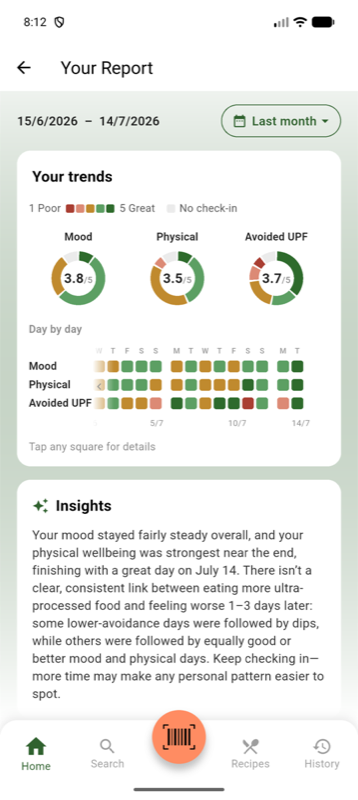
Nomi monthly wellbeing report
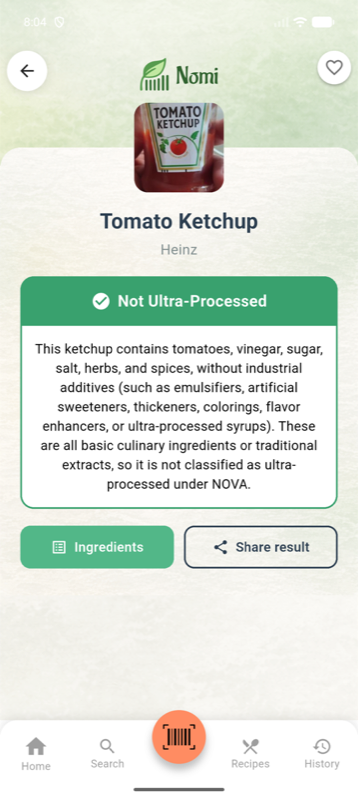
Nomi scan result screen

Product information comes from public databases and Nomi's own analysis, and may contain errors. Always check the packaging. Ultra-processed classification is based on the NOVA food processing system.

Nomi — UPF Scanner Free on iOS & Android
Get the app