Nomi
UPF Food Scanner
Know what’s really in your food
Get the free app
The Bakery at asda Multigrain Loaf by Asda
Asda

The Bakery at asda Multigrain Loaf

Barcode 5057172980789
Scanned  22  times by Nomi users
Ultra-Processed Food (UPF)

Yes — The Bakery at asda Multigrain Loaf is ultra-processed.

This bread is classified as ultra-processed because it contains palm fat, palm oil, and the preservative calcium propionate, which are industrial ingredients/additives used for texture, shelf-life extension, and processing stability. These additives place the product in the ultra-processed (NOVA 4) category, even though it also contains many minimally processed grains and seeds.

Ingredients

3 ultra-processed markers
  • OK
    fortified wheat flour (wheat flour)
    Wheat flour that has been enriched with vitamins and minerals (e.g., iron, B vitamins).
  • OK
    calcium carbonate
    A basic inorganic calcium salt used as a nutrition supplement and anticaking agent in foods.
  • OK
    iron
    Essential mineral used as a nutrient or fortifying ingredient in foods.
  • OK
    niacin (vitamin b3)
    An essential water-soluble B vitamin involved in energy metabolism; often used as a nutrient supplement or fortificant in foods.
  • OK
    thiamin (b1)
    A water-soluble B vitamin (vitamin B1) essential for carbohydrate metabolism and nervous system function.
  • OK
    water
    Essential base ingredient for countless foods and beverages; serves as solvent and texture modifier.
  • OK
    mixed grains and seeds (12%) malted wheat flakes
    A cereal ingredient consisting of a blend of mixed grains and seeds, including malted wheat flakes, used as part of a grain-based breakfast cereal or baking mix.
  • OK
    oat flakes
    Flaked oats, a common breakfast cereal ingredient and baking base.
  • OK
    toasted barley flakes
    Flaked barley grains that have been toasted to enhance flavor and texture, commonly used in cereals and baked goods.
  • OK
    toasted rye flakes
    Flaked rye grains that have been toasted to add a nutty flavor, used in cereals and baking.
  • OK
    golden flaxseeds
    Harvested seeds of the flax plant, pale golden in color; commonly used ground or whole in baking, cereals, and smoothies for fiber and omega-3 fatty acids.
  • OK
    sunflower seeds
    Small, edible seeds with a mild nutty flavor, used in snacks, baking, and cooking.
  • OK
    kibbled malted oats
  • OK
    poppy seeds
    Small seeds from the opium poppy (Papaver somniferum) used as a culinary ingredient in breads, pastries, and toppings. Nutritionally rich in healthy fats and minerals.
  • OK
    yeast
    A living microorganism used as a leavening agent in baking.
  • OK
    wheat fibre
    A plant-derived dietary fiber from wheat, used as a bulking agent or texturizer in foods.
  • OK
    wheat bran
    Outer layer of the wheat kernel, high in fiber and nutrients, commonly used as a baking or cereal ingredient.
  • OK
    wheat protein
    Protein derived from wheat; often used as a gluten-rich ingredient to improve dough structure.
  • OK
    salt
    Common mineral compound (sodium chloride) used as a seasoning and preservative across cuisines.
  • OK
    soy flour
    A basic single-ingredient flour made from soybeans, used as a gluten-free flour option with high protein content.
  • OK
    sugar
    Granulated sugar derived from sugarcane or sugar beets; a basic, single-ingredient sweetener.
  • OK
    rapeseed oil
    A basic vegetable oil derived from rapeseed, commonly used in cooking and food preparation. Not inherently processed beyond typical refining. Considered a standard culinary ingredient.
  • UPF
    palm fat
    A fat derived from the fruit of oil palm. Often a highly processed vegetable oil used in food production.
  • UPF
    palm oil
    Palm oil derived from the fruit of oil palms. When refined/processed, it is a highly processed oil product often used in processed foods.
  • OK
    spirit vinegar
    A clear, distilled vinegar typically made from fermented alcohol (ethanol) and used for pickling, flavoring, and preservation.
  • OK
    malted barley flour
    Flour milled from malted barley, a basic cereal ingredient used in baking and brewing.
  • UPF
    calcium propionate
    A food preservative added to baked goods to inhibit mold and bacterial growth.
  • OK
    malted wheat flour
    A refined flour produced from wheat that has been malted to convert starches into fermentable sugars, often used in baking for flavor or texture.
  • OK
    wholemeal wheat flour
    A coarse, whole-grain flour ground from the entire wheat kernel, used as a basic baking ingredient.
  • OK
    ascorbic acid (flour treatment agent)
    Ascorbic acid (vitamin C) used as a dough conditioner to strengthen gluten structure in flour.

Swap it for something less processed

See all Breads & Wraps →

Other breads & wraps Nomi has checked — these ones aren't ultra-processed.

Common questions about The Bakery at asda Multigrain Loaf

Is The Bakery at asda Multigrain Loaf ultra-processed?

Yes — The Bakery at asda Multigrain Loaf by Asda is ultra-processed, so it counts as a UPF (ultra-processed food). This bread is classified as ultra-processed because it contains palm fat, palm oil, and the preservative calcium propionate, which are industrial ingredients/additives used for texture, shelf-life extension, and processing stability. These additives place the product in the ultra-processed (NOVA 4) category, even though it also contains many minimally processed grains and seeds.

Which ingredients in The Bakery at asda Multigrain Loaf are ultra-processed?

Nomi flags 3 ingredients in The Bakery at asda Multigrain Loaf as ultra-processed markers: palm fat, palm oil, calcium propionate. See the full ingredient breakdown above for what each one is.

What does "ultra-processed" (UPF) mean?

Ultra-processed foods (UPFs) are industrial formulations made with ingredients and additives you wouldn't find in a home kitchen — such as emulsifiers, artificial flavourings, colourings and modified starches. The classification is based on the NOVA system used by researchers and dietitians worldwide.

How can I check whether other foods are ultra-processed?

Scan any barcode — or photograph the ingredients label — with the free Nomi app for iOS and Android. You'll get an instant ultra-processed verdict with every ingredient explained in plain English.

BBC As seen on The One Show

Scan it yourself,
right in the aisle

This page was shared from Nomi, the free app that tells you instantly whether any food is ultra-processed.

  • Scan any barcode — or photograph the ingredients label
  • Every ingredient explained in plain English
  • Daily check-ins show how food affects how you feel
  • Save favourites and build a healthier shopping list

Free download · No subscription needed to start scanning
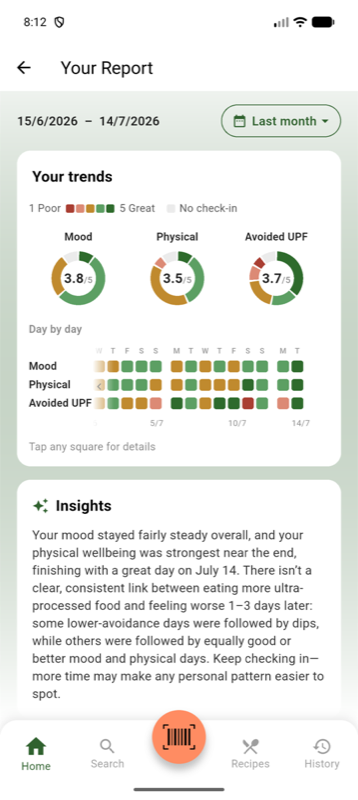
Nomi monthly wellbeing report
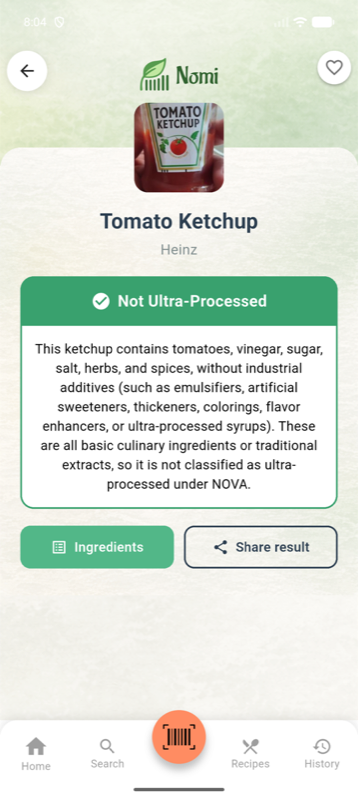
Nomi scan result screen

Product information comes from public databases and Nomi's own analysis, and may contain errors. Always check the packaging. Ultra-processed classification is based on the NOVA food processing system.

Nomi — UPF Scanner Free on iOS & Android
Get the app