Nomi
UPF Food Scanner
Know what’s really in your food
Get the free app
Olive & Rosemary Sourdough by Asda
Asda

Olive & Rosemary Sourdough

Barcode 5063089316764
Scanned  35  times by Nomi users
Not Ultra-Processed

No — Olive & Rosemary Sourdough is not ultra-processed.

The ingredients are primarily basic culinary components (fortified wheat flour, water, olives, olive tapenade ingredients, vegetable oils, rice flour, fermented wheat flour, herbs, malted barley flour) plus ascorbic acid as a flour treatment agent. Fortified flour and ascorbic acid are allowed non-UPF additives under the guidelines, and there are no industrial sweeteners, emulsifiers, flavorings, or highly processed oils like palm fruit oil. Therefore this bread is not classified as ultra-processed (UPF) under NOVA according to the provided rules.

Ingredients

1 ultra-processed marker
  • OK
    fortified wheat flour (wheat flour)
    Wheat flour that has been enriched with vitamins and minerals (e.g., iron, B vitamins).
  • OK
    calcium carbonate
    A basic inorganic calcium salt used as a nutrition supplement and anticaking agent in foods.
  • OK
    iron
    Essential mineral used as a nutrient or fortifying ingredient in foods.
  • OK
    niacin (vitamin b3)
    An essential water-soluble B vitamin involved in energy metabolism; often used as a nutrient supplement or fortificant in foods.
  • OK
    thiamin (b1)
    A water-soluble B vitamin (vitamin B1) essential for carbohydrate metabolism and nervous system function.
  • OK
    water
    Essential base ingredient for countless foods and beverages; serves as solvent and texture modifier.
  • OK
    green olives (10%) [green olives
  • OK
    salt
    Common mineral compound (sodium chloride) used as a seasoning and preservative across cuisines.
  • OK
    acidity regulator (lactic acid)]
  • OK
    olive tapenade (2%) [black olives
  • OK
    olive oil
    A basic culinary oil pressed from olives, used for cooking, dressing, and flavor.
  • OK
    tomatoes
    Fresh tomatoes, edible fruit often used as a vegetable in salads, sauces, and cooking.
  • OK
    capers
  • OK
    lemon juice
    The clear, acidic juice extracted from lemons, used for brightness and acidity in foods and drinks.
  • OK
    garlic
    A bulbous aromatic spice used to impart savory flavor in cooking; can be used fresh, sautéed, roasted, or in powder form.
  • OK
    cornflour
    Ground corn starch used as a thickening agent in cooking and baking.
  • OK
    thyme
    A small, woody perennial herb with fragrant leaves used to flavor dishes, soups, and stews.
  • OK
    sunflower oil
    A neutral-tasting culinary oil pressed from sunflower seeds, rich in unsaturated fats and commonly used for frying and dressings.
  • OK
    oregano]
  • OK
    rapeseed oil
    A basic culinary oil pressed from rapeseeds (Brassica napus). Used for frying, baking, and dressings. Neutral flavor.
  • OK
    rice flour
    A finely milled flour from milled rice, commonly used as a gluten-free thickener or flour substitute in baking and cooking.
  • OK
    fermented wheat flour
    Wheat flour that has undergone fermentation, typically with yeast or lactic acid bacteria, used to help leaven or alter flavor in baked products.
  • OK
    rosemary
    A fragrant herb used fresh or dried to season dishes and compounds like oils and butters.
  • OK
    malted barley flour
    Flour milled from malted barley, a basic cereal ingredient used in baking and brewing.
  • UPF
    ascorbic acid (flour treatment agent)
    Ascorbic acid used as a flour treatment agent (antioxidant, vitamin C). It is an extracted/synthesized additive used in baking and manufacturing.
  • OK
    including cereals containing gluten
  • OK
    see ingredients in bold. may also contain sesame seeds
  • OK
    milk
    A dairy liquid produced by cows; a basic, widely used food ingredient.
  • OK
    soy
    Legume seed used for its beans; common in soy products and as a source of protein and oil.
  • OK
    rye
    A cereal grain from the game of rye (Secale cereale); used for breads, crackers, and cereals.
  • OK
    oats and spelt. suitable for vegetarians warning extra care has been taken to remove stones
  • OK
    although some may remain

More in Breads & Wraps

See all Breads & Wraps →

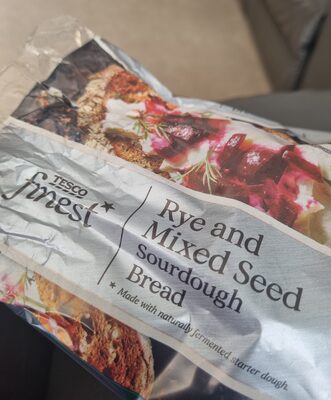
Other breads & wraps products Nomi has analysed ingredient by ingredient.
Common questions about Olive & Rosemary Sourdough

Is Olive & Rosemary Sourdough ultra-processed?

No — Olive & Rosemary Sourdough by Asda is not ultra-processed, so it is not a UPF (ultra-processed food). The ingredients are primarily basic culinary components (fortified wheat flour, water, olives, olive tapenade ingredients, vegetable oils, rice flour, fermented wheat flour, herbs, malted barley flour) plus ascorbic acid as a flour treatment agent. Fortified flour and ascorbic acid are allowed non-UPF additives under the guidelines, and there are no industrial sweeteners, emulsifiers, flavorings, or highly processed oils like palm fruit oil. Therefore this bread is not classified as ultra-processed (UPF) under NOVA according to the provided rules.

Which ingredients in Olive & Rosemary Sourdough are ultra-processed?

Nomi flags one ingredient in Olive & Rosemary Sourdough as an ultra-processed marker: ascorbic acid (flour treatment agent). See the full ingredient breakdown above for what each one is.

What does "ultra-processed" (UPF) mean?

Ultra-processed foods (UPFs) are industrial formulations made with ingredients and additives you wouldn't find in a home kitchen — such as emulsifiers, artificial flavourings, colourings and modified starches. The classification is based on the NOVA system used by researchers and dietitians worldwide.

How can I check whether other foods are ultra-processed?

Scan any barcode — or photograph the ingredients label — with the free Nomi app for iOS and Android. You'll get an instant ultra-processed verdict with every ingredient explained in plain English.

BBC As seen on The One Show

Scan it yourself,
right in the aisle

This page was shared from Nomi, the free app that tells you instantly whether any food is ultra-processed.

  • Scan any barcode — or photograph the ingredients label
  • Every ingredient explained in plain English
  • Daily check-ins show how food affects how you feel
  • Save favourites and build a healthier shopping list

Free download · No subscription needed to start scanning
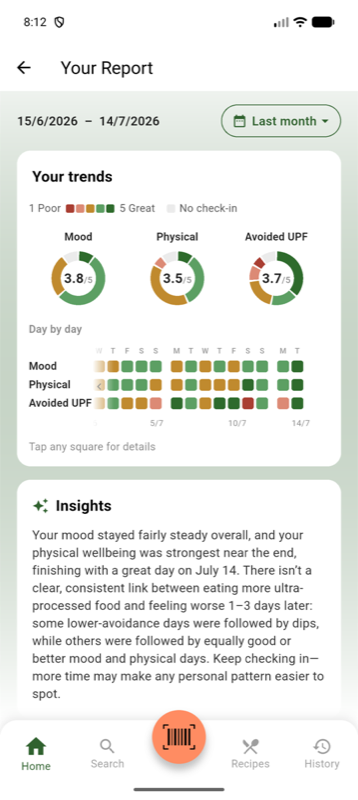
Nomi monthly wellbeing report
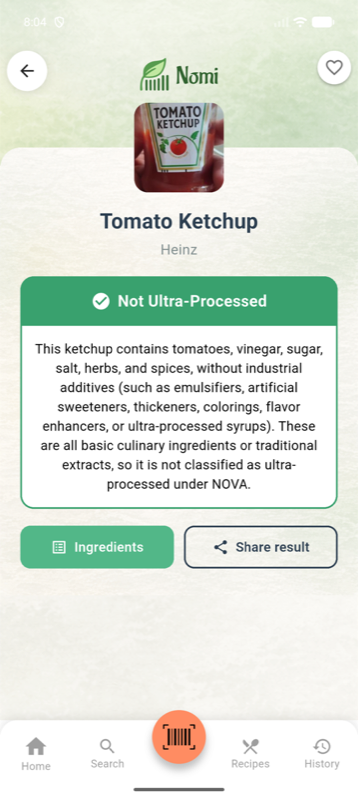
Nomi scan result screen

Product information comes from public databases and Nomi's own analysis, and may contain errors. Always check the packaging. Ultra-processed classification is based on the NOVA food processing system.

Nomi — UPF Scanner Free on iOS & Android
Get the app