Nomi
UPF Food Scanner
Know what’s really in your food
Get the free app
Hot Cross Buns by Tesco
Tesco

Hot Cross Buns

Barcode 5000119274960
Scanned  48  times by Nomi users
Ultra-Processed Food (UPF)

Yes — Hot Cross Buns is ultra-processed.

The product is ultra-processed because it contains several industrial additives and formulations. Specifically: invert sugar syrup (industrially processed sugar syrup), palm oil and palm fat (highly refined oils), emulsifiers (mono- and di-acetyl tartaric acid esters of mono- and di-glycerides of fatty acids, mono- and di-glycerides of fatty acids), flavouring (industrial flavouring agents), potato dextrin (modified carbohydrate), and added wheat protein. These ingredients place the product in the ultra-processed (NOVA 4) category.

Ingredients

6 ultra-processed markers
  • OK
    wheat flour
    A basic grain-based flour from wheat used as a primary ingredient in baking and cooking.
  • OK
    calcium carbonate
    A basic inorganic calcium salt used as a nutrition supplement and anticaking agent in foods.
  • OK
    iron
    Essential mineral used as a nutrient or fortifying ingredient in foods.
  • OK
    niacin (vitamin b3)
    A water-soluble vitamin used as a nutrient and often added to foods as a fortifying vitamin.
  • OK
    thiamin
    A water-soluble B vitamin used as a nutrient and fortification ingredient.
  • OK
    moistened mixed fruits (25%) [sultanas
    A mix of dried fruits including sultanas, moistened, used in baking and confections.
  • OK
    raisins
    Dried grapes, commonly used as a sweet ingredient in baking and snacks; natural, minimally processed fruit product.
  • OK
    currants
    Small dried berries of certain grape varieties or cultivatedRaspberries? Currants are small dried fruit, commonly red or black, used in baking and cooking.
  • OK
    water
    Water is a basic culinary ingredient used as a solvent and diluent in foods.
  • OK
    water
    Essential base ingredient for countless foods and beverages; serves as solvent and texture modifier.
  • OK
    mixed peel (2%) [orange peel
    Citrus peel candied or dried, used for flavor in baked goods.
  • OK
    lemon peel]
    Lemon zest or dried lemon peel used for flavoring.
  • UPF
    invert sugar syrup
    A refined sugar syrup produced by hydrolyzing sucrose into glucose and fructose; a processed sweetener often used in foods.
  • OK
    yeast
    A living microorganism used as a leavening agent in baking.
  • OK
    wheat gluten
    Gluten from wheat; a protein complex used as a food ingredient to provide elasticity and structure in doughs and meat substitutes (e.g., seitan).
  • UPF
    potato dextrin
    A carbohydrate derived from potato starch through hydrolysis, yielding a soluble dextrin used as a thickener or binding agent.
  • OK
    wheat protein
    Protein derived from wheat; often used as a gluten-rich ingredient to improve dough structure.
  • UPF
    palm oil
    A widely used edible oil pressed from the fruit of oil palms; a basic culinary oil but highly processed in many commercial products.
  • OK
    salt
    Common mineral compound (sodium chloride) used as a seasoning and preservative across cuisines.
  • UPF
    emulsifiers (mono- and di-acetyl tartaric acid esters of mono- and diglycerides of fatty acids, mono- and diglycerides of fatty acids)
    A food additive consisting of mono- and diglycerides of fatty acids and their acetyl tartaric acid esters, used as emulsifier and stabilizer in processed foods.
  • UPF
    palm fat
    A fat derived from the fruit of oil palm. Often a highly processed vegetable oil used in food production.
  • UPF
    flavouring
    A generic additive used to impart or enhance flavor; can be synthetic or derived from natural sources.
  • OK
    rapeseed oil
    A basic culinary oil pressed from rapeseeds (Brassica napus). Used for frying, baking, and dressings. Neutral flavor.
  • OK
    vegetable fibre
    Plant-derived dietary fibre often used as a texture enhancer or bulking agent.
  • OK
    soy flour
    A basic single-ingredient flour made from soybeans, used as a gluten-free flour option with high protein content.
  • OK
    ascorbic acid (flour treatment agent)
    Ascorbic acid (vitamin C) used as a dough conditioner to strengthen gluten structure in flour.

Swap it for something less processed

See all Breads & Wraps →

Other breads & wraps Nomi has checked — these ones aren't ultra-processed.

Common questions about Hot Cross Buns

Is Hot Cross Buns ultra-processed?

Yes — Hot Cross Buns by Tesco is ultra-processed, so it counts as a UPF (ultra-processed food). The product is ultra-processed because it contains several industrial additives and formulations. Specifically: invert sugar syrup (industrially processed sugar syrup), palm oil and palm fat (highly refined oils), emulsifiers (mono- and di-acetyl tartaric acid esters of mono- and di-glycerides of fatty acids, mono- and di-glycerides of fatty acids), flavouring (industrial flavouring agents), potato dextrin (modified carbohydrate), and added wheat protein. These ingredients place the product in the ultra-processed (NOVA 4) category.

Which ingredients in Hot Cross Buns are ultra-processed?

Nomi flags 6 ingredients in Hot Cross Buns as ultra-processed markers: invert sugar syrup, potato dextrin, palm oil, emulsifiers (mono- and di-acetyl tartaric acid esters of mono- and diglycerides of fatty acids, mono- and diglycerides of fatty acids), palm fat, flavouring. See the full ingredient breakdown above for what each one is.

What does "ultra-processed" (UPF) mean?

Ultra-processed foods (UPFs) are industrial formulations made with ingredients and additives you wouldn't find in a home kitchen — such as emulsifiers, artificial flavourings, colourings and modified starches. The classification is based on the NOVA system used by researchers and dietitians worldwide.

How can I check whether other foods are ultra-processed?

Scan any barcode — or photograph the ingredients label — with the free Nomi app for iOS and Android. You'll get an instant ultra-processed verdict with every ingredient explained in plain English.

BBC As seen on The One Show

Scan it yourself,
right in the aisle

This page was shared from Nomi, the free app that tells you instantly whether any food is ultra-processed.

  • Scan any barcode — or photograph the ingredients label
  • Every ingredient explained in plain English
  • Daily check-ins show how food affects how you feel
  • Save favourites and build a healthier shopping list

Free download · No subscription needed to start scanning
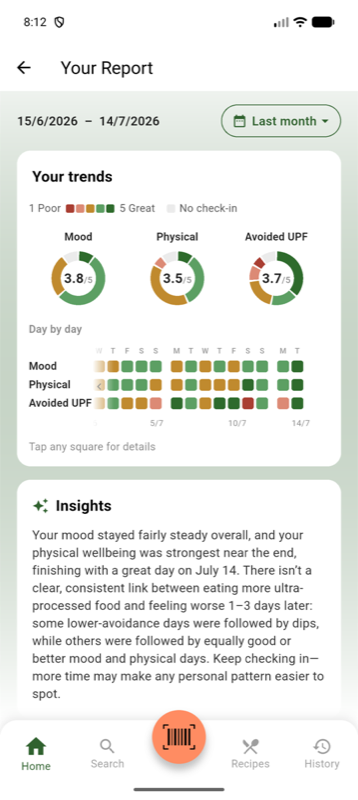
Nomi monthly wellbeing report
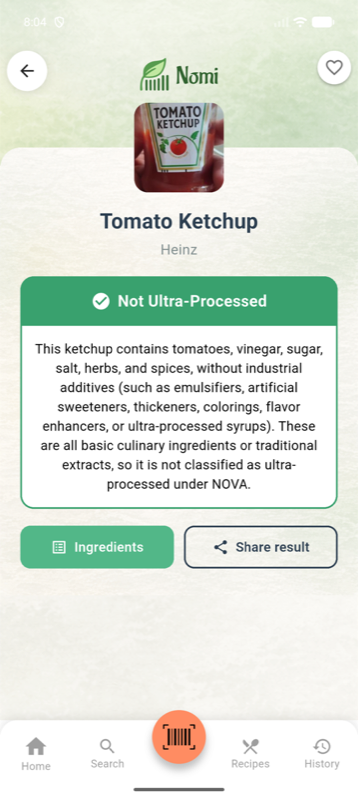
Nomi scan result screen

Product information comes from public databases and Nomi's own analysis, and may contain errors. Always check the packaging. Ultra-processed classification is based on the NOVA food processing system.

Nomi — UPF Scanner Free on iOS & Android
Get the app